


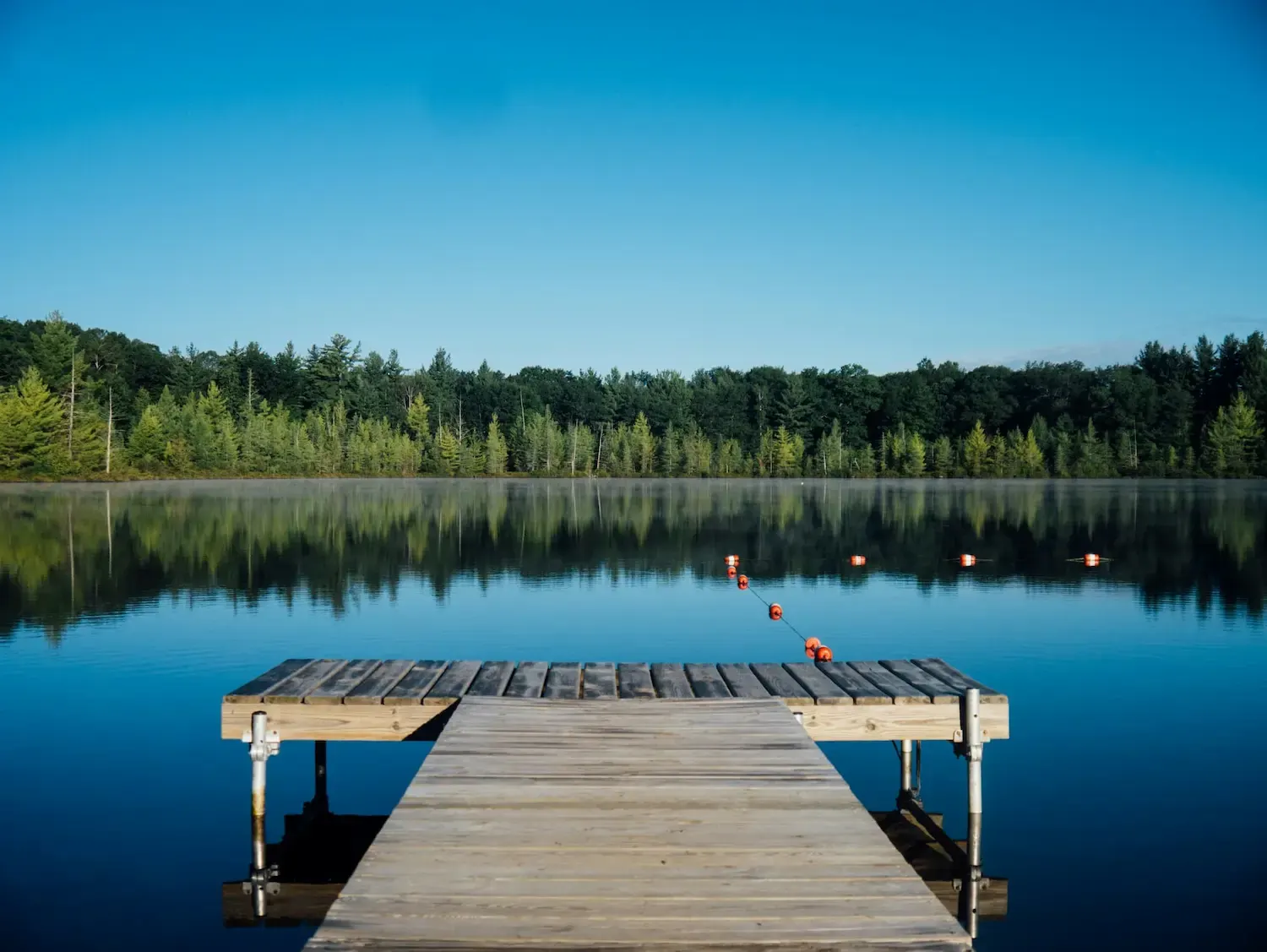
Types of algae
Freshwater algae that cause problems usually fall into three groups: planktonic algae, filamentous algae and cyanobacteria (blue-green algae). Knowing which you have, and what triggers it, is the first step to controlling it.
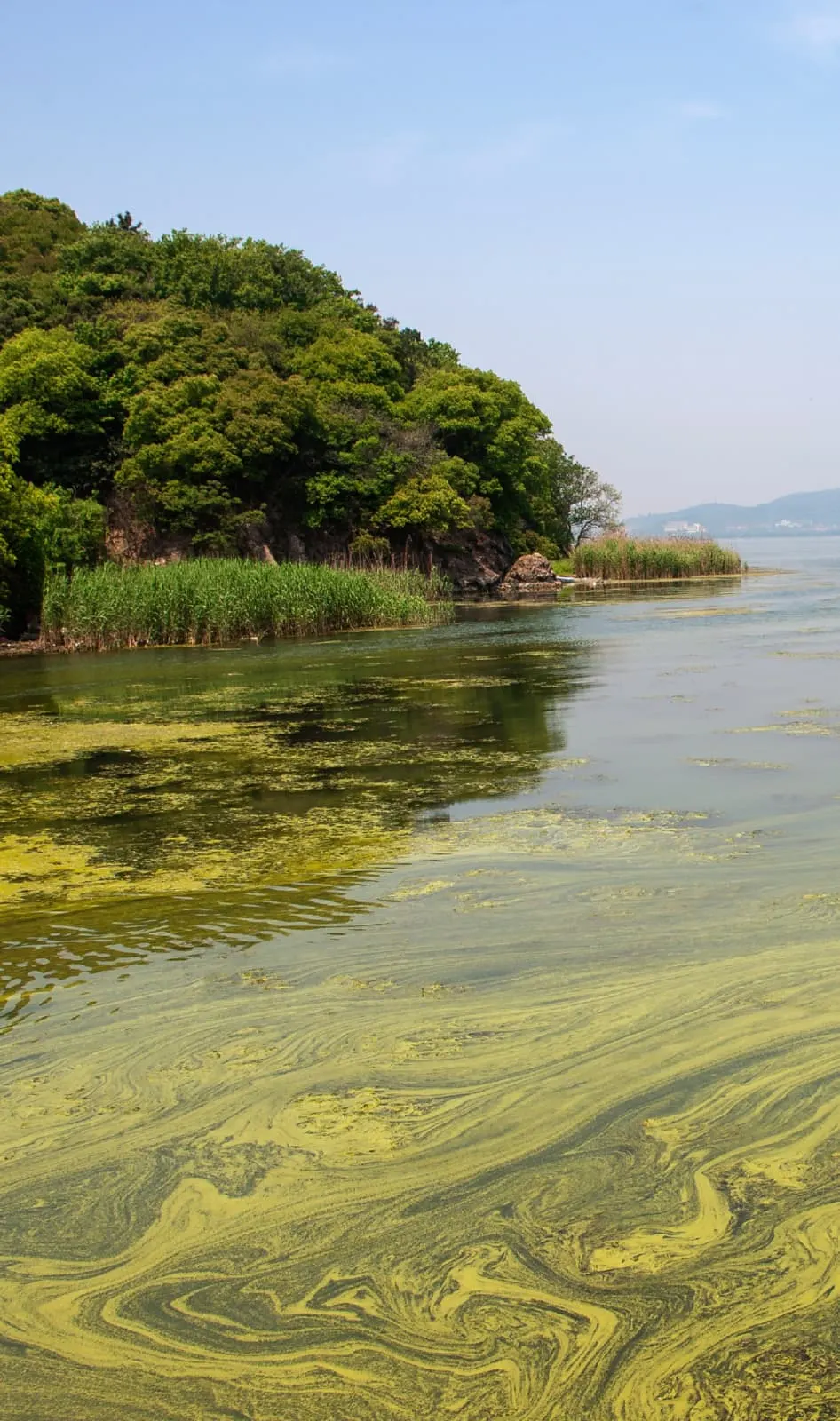
Green water
Planktonic algae
Microscopic free-floating cells that turn water pea-soup green, brown or even red. In small amounts they feed the food chain; in a bloom they can strip oxygen, especially at night or when they die off.
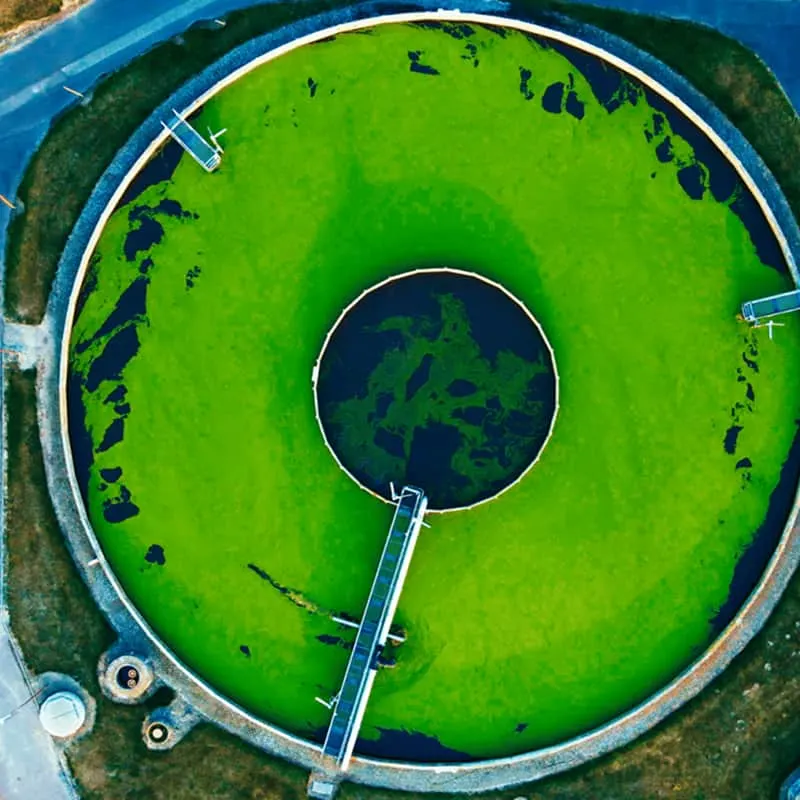
String algae
Filamentous algae
Strands that start on rocks or the bottom in shallow water and knit into slimy mats that can float up as scum. Rarely toxic, but unsightly, and they choke shorelines and swimming areas.
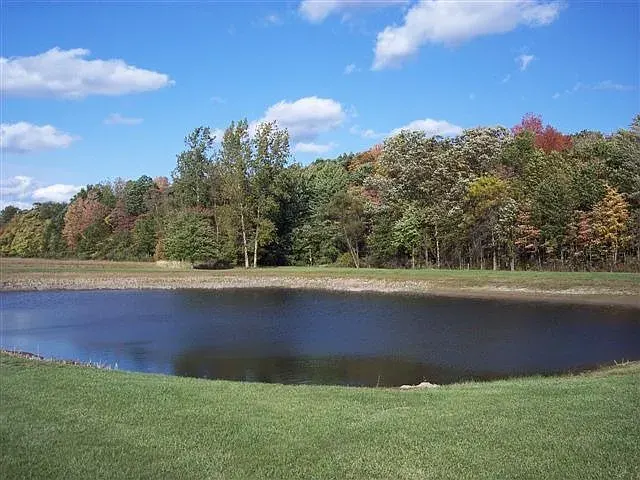
Blue-green algae
Cyanobacteria
Bacteria, not true algae, behind most harmful algal blooms. Gas vesicles let them float up for light and sink for nutrients. Some produce potent toxins such as microcystins, anatoxins and cylindrospermopsin.
Different planktonic species tint water differently: green algae turn it green, some diatoms brown, and Euglena reddish. Planktonic blooms favour nutrient-rich, still water in warm, sunny weather.
Filamentous algae look like hair-like threads or wool-like mats rather than green water. They provide habitat for small aquatic animals, but thrive when ponds are stagnant and nitrogen and phosphorus are high, often in midsummer.
Cyanobacteria are the most troublesome. A toxic bloom can contaminate drinking water, cause illness or liver damage in people and animals, and close lakes and beaches. Microcystis is one common toxin-producing genus; in 2014 a Microcystis bloom in Lake Erie led to a “do not drink” advisory for more than 400,000 people in Toledo, Ohio. Even non-toxic blooms cause earthy or fishy tastes and odours in water supplies and skin irritation in swimmers.
Why blooms happen
Algae are present in most water bodies. Blooms happen when conditions give them the upper hand:
Excess nutrients (eutrophication)
High phosphorus and nitrogen are the main trigger. They come from fertiliser runoff, animal waste, septic leakage, sewage effluent and decaying leaves. That is why blooms so often follow heavy rain or sit downstream of farmland.
Warm temperatures
Algae, especially cyanobacteria, grow faster in warm water, so blooms are far more common in summer and early autumn. A warming climate is lengthening bloom seasons.
Sunlight and still water
Calm, stratified water lets nutrients concentrate near the surface and buoyant cyanobacteria sit in the sun. Low flow, in small ponds or storages during drought, favours algae; circulation works against them.
Low oxygen at depth
In a stratified water body the bottom layer runs short of oxygen as organic matter decays, and the sediment releases phosphorus that feeds the surface. Some cyanobacteria migrate down at night to feed and rise by day.
Other factors play a part, such as pH changes or clear water that lets light reach deeper. But the recipe for a bloom is usually nutrient-rich water, warmth, sunlight and still conditions. For more on the biology, read our algae and biofilm primer.
The damage blooms do
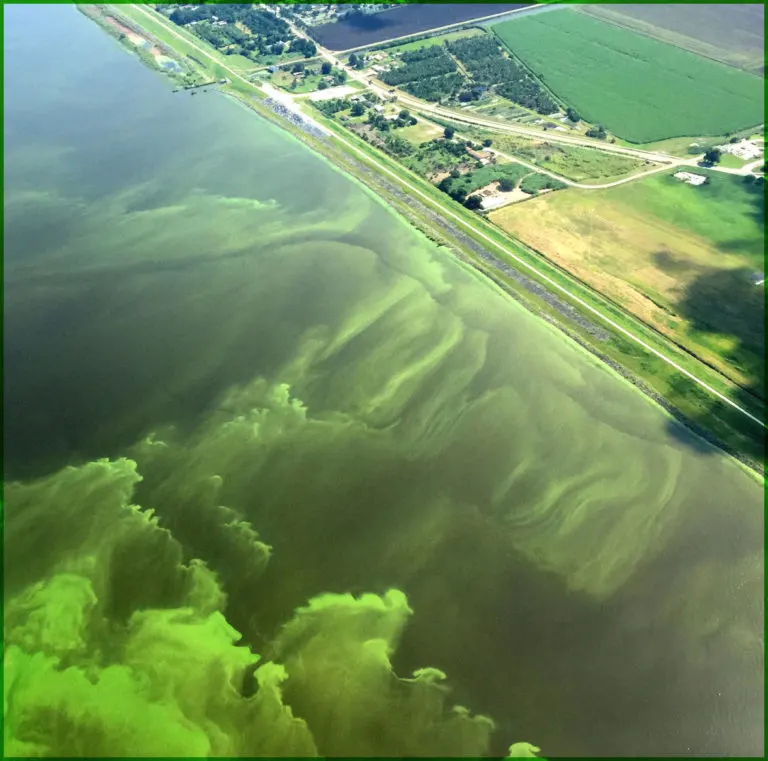
Toxicity to people and animals
Cyanobacterial toxins can poison wildlife, pets, stock and people. Dogs are often victims after swimming in or drinking from scummy water, and stock can be poisoned at farm dams. In people, exposure has caused rashes, gastrointestinal illness, liver damage and neurological symptoms.
Oxygen depletion and fish kills
When a large bloom dies, the bacteria decomposing it use up the oxygen. Fish and other aquatic life suffocate, and a healthy lake can become a foul-smelling dead zone.
Ecological disruption
Blooms shade out beneficial aquatic plants, removing shelter for small fish and the zooplankton that graze on algae. Cyanobacteria are poor food for zooplankton, so natural grazing control breaks down, and day-night oxygen swings stress aquatic animals.
Unsightly water, odour and lost recreation
Scum and smell drive away swimmers, boaters and anglers, close beaches and hurt tourism and property values. Geosmin and other compounds give drinking water and fish an earthy, musty taste that is costly to treat.
Biofilm and infrastructure
Biofilm clogs intake screens, filters and pipes and promotes corrosion. Exposed to chlorine it can form disinfection by-products such as trihalomethanes. In cooling towers and tanks it cuts heat exchange efficiency; on boats it adds drag; on ramps and jetties it makes surfaces slippery.
Control methods compared
There are many ways to control algae, from manual removal to ultrasound. Here are three common categories: chemical algaecides, aeration and circulation, and ultrasonic technology. Each has its place, and a blend often works best. Consider the water body's size, how it is used, the type of algae and the environmental impact.
Chemical algaecides
Copper-based products such as copper sulfate, herbicides such as endothall, and peroxides kill algae; alum or lanthanum bind phosphate instead. They have been used for decades.
Pros
- Fast: a well-targeted dose can knock back a visible bloom within days, useful in an emergency
- Easy to apply, with a long track record
- Peroxide-based products break down quickly and leave fewer residues
- Applied early, can stop a bloom before it develops
Cons
- Short-term: they don't address the nutrients, so algae often rebounds, sometimes within days
- Costly and labour-intensive when repeated
- Copper sulfate is classed as highly toxic by the US EPA and builds up in sediment, leaving a sterile bottom
- Mostly non-selective: they can harm zooplankton, plants and, at high doses, fish
- Killing cells releases their contents, including toxins, into the water, and the decay uses up oxygen
Aeration and circulation
Bottom diffusers, surface aerators and fountains, and mechanical mixers break up still layers and add oxygen. The goal is not to kill algae but to make the water less hospitable to them.
Pros
- Adds oxygen and supports a healthier ecosystem without chemicals
- Helps beneficial bacteria break down excess nutrients and sludge over time
- Disturbs the calm surface cyanobacteria prefer and reduces stratification
- Generally safe for fish, and often improves habitat
Cons
- Doesn't kill algae outright, so results can be slow, and it may not be enough on its own in a severe bloom
- Running pumps or compressors 24/7 costs power, though solar options exist
- Badly set up, it can lift nutrient-rich bottom water and worsen a bloom
- Each unit covers a limited radius; shallow ponds (under about 2 m) gain less from bottom aeration
Our OXYWave Buoyancy Turbines circulate and oxygenate the whole water body on a fraction of the power of conventional aeration.
Ultrasonic algae control
Units emit sound above the range of human hearing (over about 20 kHz) into the water, tuned to the gas vesicles buoyant algae such as cyanobacteria use to stay near the surface.
Pros
- Nothing added to the water: no toxic residue, and no harm to beneficial bacteria, fish or plants when properly used
- Easy to install and runs continuously with little oversight
- Very effective against blue-green algae and many green algae
- Scales from a small pond to a large reservoir with the right number of units
- No impact on water use: you can keep irrigating or swimming
Cons
- Each unit covers a set radius, so large lakes need several
- Less effective on bottom-growing filamentous algae and macroalgae that don't rely on buoyancy
- Works gradually: expect days to weeks, not hours
- Doesn't remove the nutrients feeding the bloom, so it belongs in a plan that does
- Units need periodic cleaning and eventual replacement
How ultrasound works
Many bloom-forming algae, cyanobacteria in particular, rely on tiny internal gas vesicles to float near the surface for light. Precisely tuned ultrasonic frequencies make those vesicles vibrate and collapse. The algae lose buoyancy, sink out of the light and can no longer photosynthesise, so they die back, without chemicals.
Ultrasound also interferes with algae cell membranes, nutrient uptake and division, and at some frequencies with the pigments they need for photosynthesis. The overall effect is that algae stop growing and decline.
Frequencies and power are set to avoid harming larger organisms: fish and aquatic plants are not affected. Sweeping across a broad range of frequencies reaches many species and stops any one adapting. The approach grew from European research that mapped algal species to the frequencies that disrupt them.
For biofilm, ultrasound creates a microscopic turbulence on surfaces that makes it hard for bacteria to settle and build their sticky matrix. Existing biofilm is disrupted and the loosened organisms are consumed by other micro-organisms or filtered out.
Ultrasound doesn't zap algae in seconds; it suppresses growth. You may still see some algae at first, but it won't build into a major bloom, and over days and weeks treated water usually shows falling cell counts and better clarity. Because new cells are continually affected, there is no rebound like the one after a one-off chemical dose. The US EPA notes that ultrasound has been used successfully in ponds and small lakes, with a single device covering up to about 8 acres (3.2 ha) in ideal conditions; higher-end, multi-transducer systems cover more.
Results in the field
Our workHarrietville dredge hole, Victoria
A 1 ha dredge hole with a recurring toxic bloom of Dolichospermum circinale: 35,900 cells/mL in December 2025, with contact advised against. We installed a single SonicPure Pulsar on 240 V mains. Independent laboratory reports recorded 13,500 cells/mL by mid-February and zero toxic cyanobacteria by 31 August 2026.
Read the case study →From our partnersPolk County lakes, Florida
In 2023 the county deployed solar Sentinel AIQ platforms with Pulsar 4400 transmitters on two public lakes with chronic blue-green blooms, including Microcystis and Cylindrospermopsis. Over four months, total blue-green cell counts fell 85% in the 22 ha lake and 42% in the 41 ha lake, and no major bloom returned that summer.
Read the case study →From our partnersWoodland Reservoir, Syracuse, New York
The city used 2.7 to 6.8 tonnes of copper sulfate a year on a 450 ML open drinking water reservoir, only for algae to rebound within days. After switching to a Pulsar ultrasonic system in 2022, no copper was needed through an unusually hot summer, and water quality stayed steadier.
Read the case study →From our partnersNeedwood Golf Course, Maryland
An ultrasonic unit installed in 2013 to meet Audubon environmental guidelines kept a pond free of major blooms for nearly a decade. When it failed in early 2023 the algae came straight back; a replacement SonicPure unit cleared it again.
Read the case study →Monitor results with algae counts or chlorophyll readings and adjust the set-up as needed, adding a unit for coverage or moving one. Our systems report remotely, and we review every site with you.
Guidance for your site

Property and farm owners
For an ornamental pond, farm dam or small private lake, priorities are usually appearance, fish and stock health, and easy upkeep. Start with prevention: keep fertiliser and clippings out of the water, plant a native buffer around the edge to absorb nutrients, and don't overfeed fish. Rake out string algae for quick relief, and add a small aerator or fountain for oxygen.
Be careful with algaecides where fish or stock drink. If you must use one, follow the label, treat part of the water at a time to avoid an oxygen crash, and remove the dead algae afterwards. A small ultrasonic unit, on low voltage or solar, keeps green water away continuously and is safe for fish, frogs and birds. Pair it with circulation and nutrient control for clear water year-round.
Councils and water authorities
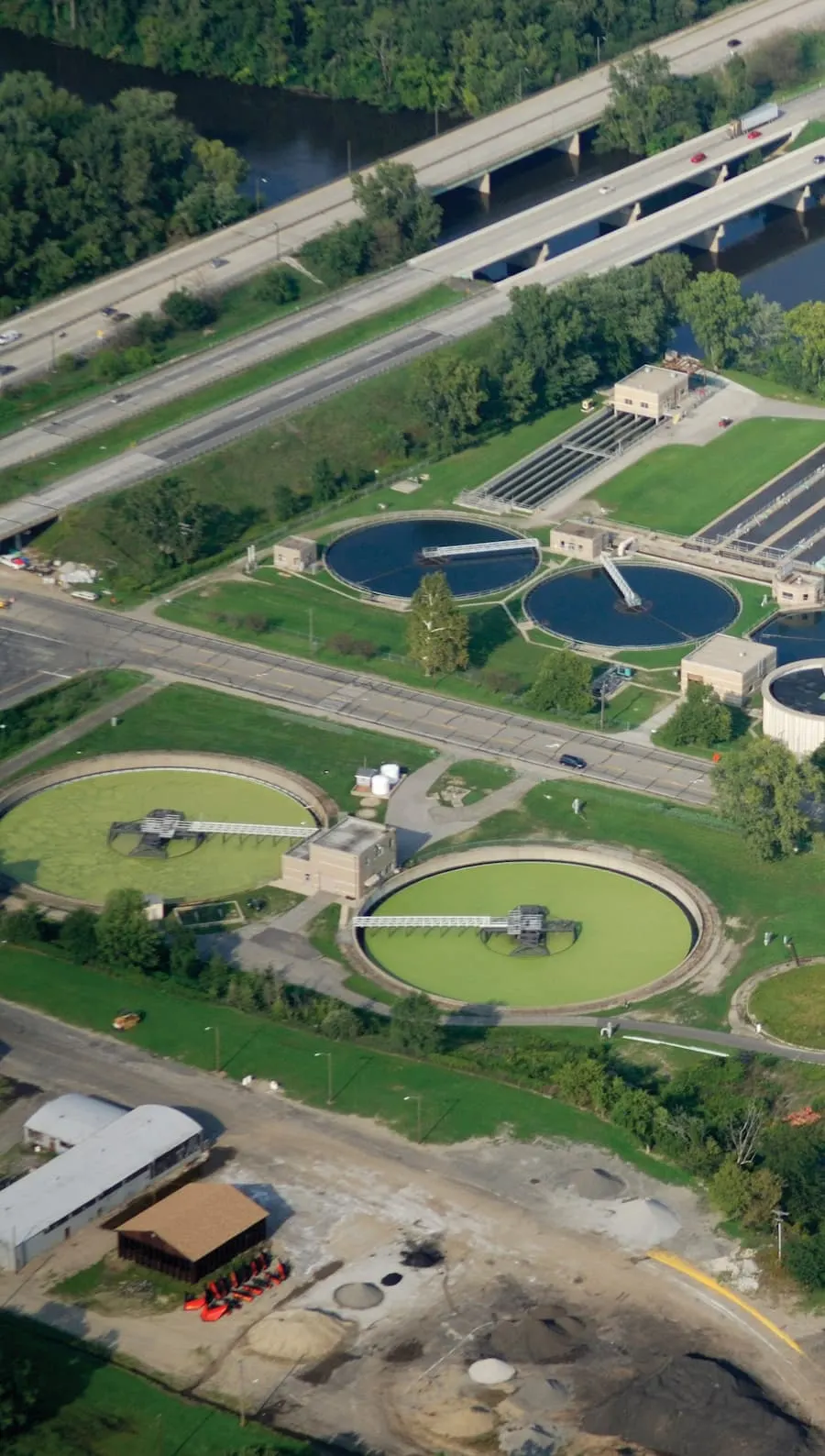
Public lakes, storages and treatment lagoons have to balance results with public safety and compliance. Start with a management plan built on monitoring: nutrients, chlorophyll-a and, in bloom season, cyanotoxins. Reduce nutrient loads upstream, and consider destratification or circulation for larger storages.
Ultrasound appeals for public water because nothing is added: no copper limits or dosing schedules, and it is easy to explain to the community. A site assessment sets the number and placement of units, near bloom hotspots or intakes, and live monitoring buoys can track algae as conditions change. Keep a fallback plan for an extreme bloom after a storm, and keep working on the nutrient sources.
Industry and commercial sites
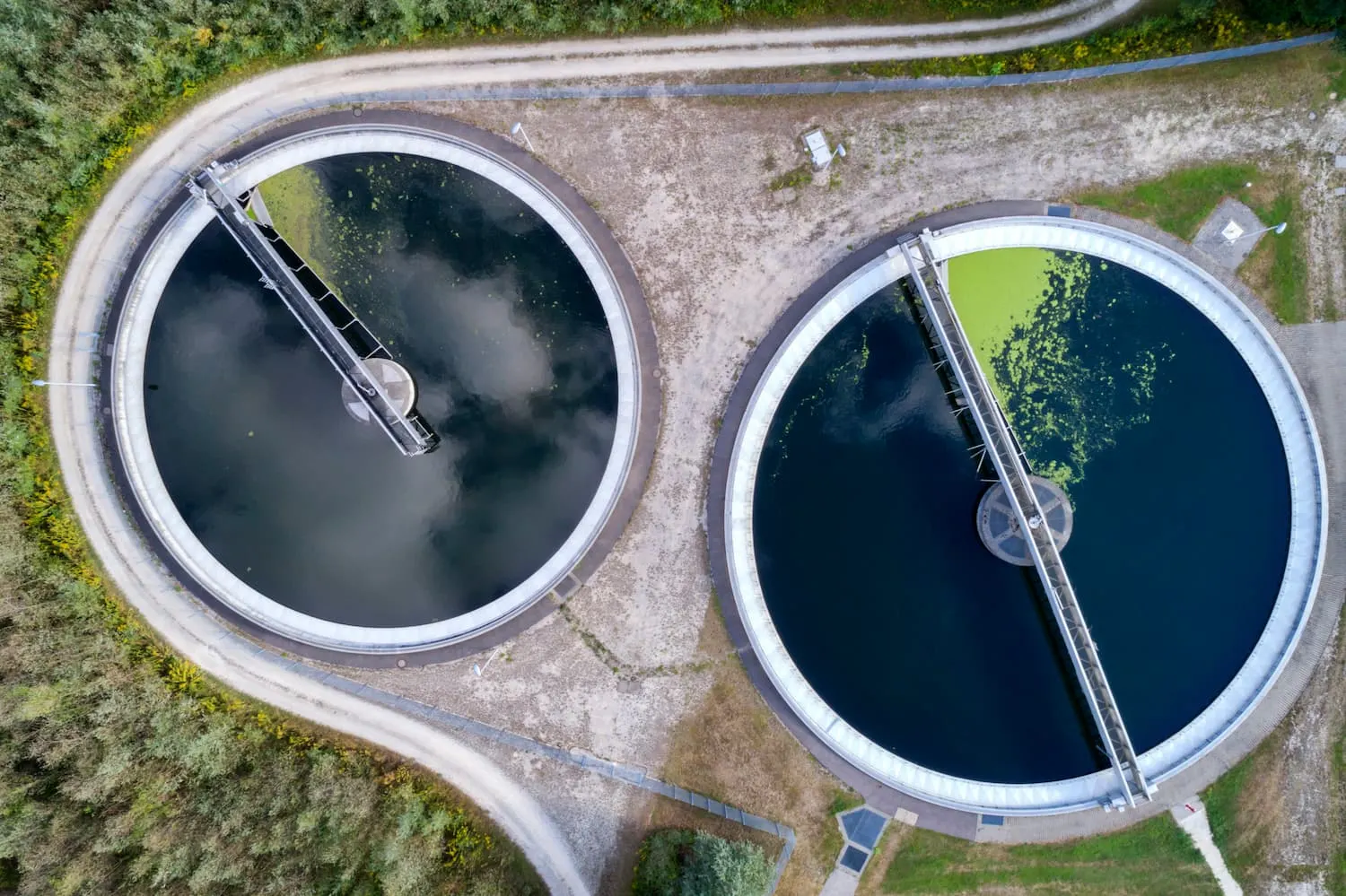
Cooling ponds, lagoons, tanks and water features need steady operation, protected equipment and compliant discharge. Chlorine and copper corrode equipment and end up in blowdown and discharge water.
Ultrasonic transducers in a pond or tank prevent algae and biofilm build-up continuously, on mains, 24 V DC or solar, with no downtime for cleaning and no added corrosion. Complex systems need a layout designed for full coverage, which we do with you. Skimming, filtration and good housekeeping still help.
When ultrasound isn't the answer
Ultrasound is effective, but it is not a silver bullet. Sometimes another measure is needed, or a combination:
Thick surface mats or macroalgae
Filamentous mats and plant-like algae such as Chara grow from the bottom and don't rely on buoyancy. Remove the bulk physically; a targeted peroxide treatment or shading may help small ponds.
Weeds, not algae
Duckweed, watermeal and rooted water weeds are plants; ultrasound is tuned for algae cells. Identify what you have first, then use harvesting or an approved herbicide.
A severe toxic bloom already under way
Ultrasound works gradually. In an emergency, protect people and stock first and use emergency measures alongside it, then let continuous treatment prevent the next bloom.
Nutrient overload
Years of nutrient-rich sludge keep feeding algae. Bind or remove the nutrients: our biological and phosphorus-locking treatments (PBE, SchlixX Plus, SeDox Max), or dredging where needed, and tackle sources in the catchment.
Very large or complex water bodies
Big lakes with many bays may need a network of units. Concentrate on problem areas such as swimming areas, marinas or intakes, and manage the rest with catchment and flushing measures.
Species without gas vesicles
Some green algae and bottom-dwelling cyanobacteria such as Oscillatoria are less affected. Identify the species with a laboratory test and tailor the plan.
In most cases the answer is not either-or. A council might combine ultrasound, circulation and nutrient treatment; a farm might use ultrasound, PBE and some manual cleaning. Deal with the root cause, understand the ecosystem and use complementary tools: that is the thinking behind our multi-stage remediation.
Sources
- US Environmental Protection Agency, Control measures for cyanobacterial HABs in surface water: guidance on non-chemical bloom controls, including ultrasound.
- Dodds, W.K. et al. (2009), Eutrophication of U.S. freshwaters: analysis of potential economic damages, Environmental Science & Technology.
- Field results: the case studies linked above. Partner results are as reported by our US partner SonicPure; Harrietville results are from independent laboratory algal reports.