


Introduction to ultrasound

How it works
An ultrasonic unit sends sound waves through the water column, creating microscopic pressure changes. The frequencies interfere with the way algae cells control their buoyancy and their ability to photosynthesise, absorb nutrients and reproduce. Algae sink below the light zone and die back, and biofilm is prevented from forming on nearby surfaces. Treatment is continuous, 24 hours a day, so current blooms are removed and future ones prevented.
Tuned to the target
Ultrasound covers a broad spectrum, and not every frequency is safe, or smart, for water treatment. High-powered ultrasound causes cavitation: microscopic bubbles that collapse violently, generating extreme heat and pressure. That is lethal to everything nearby, not just algae.
Modern algae control takes a different approach. It uses the specific frequencies to which algae are highly sensitive. When exposed, their internal structures vibrate, disrupting buoyancy and reproduction, and they sink and die without chemicals or collateral damage.
A discovery a century in the making
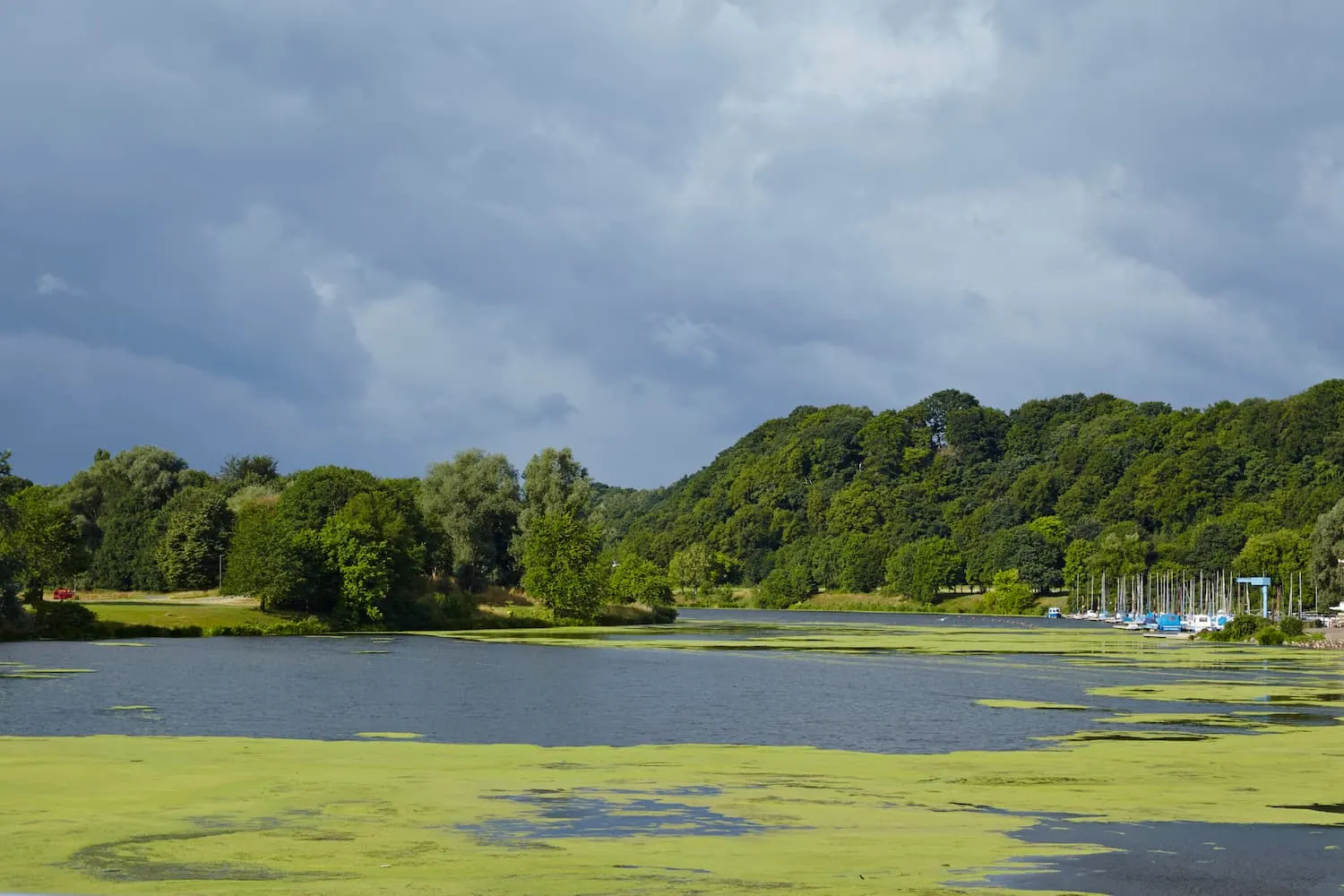
The idea of fighting algae with sound began by accident. As the story goes, more than a century ago gunfire near a stagnant, algae-covered waterway mysteriously cleared the bloom. It took generations of research to answer the question it raised: can targeted sound really clean water? It can, but only when it is tuned correctly.
Ultrasonic waves also disrupt the bacteria that form biofilm, the sticky layer that fouling organisms such as mussels feed on. Preventing that foundation from forming cuts the problem off at the source.
Perfecting the pulse
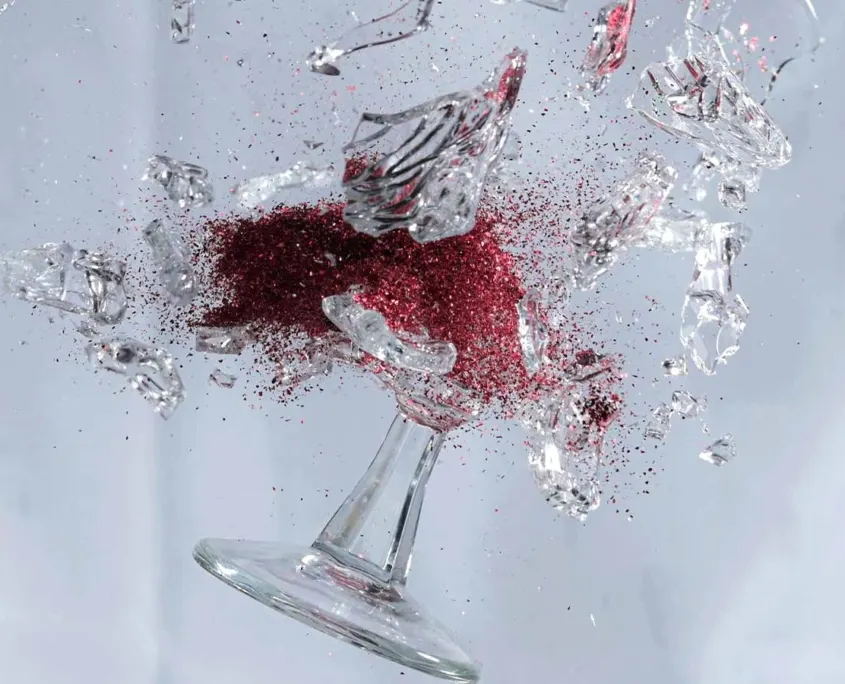
Ultrasound works by matching the natural resonant frequency of algae cells, the vibration rate at which their internal structures begin to break down. It is the same principle as an opera singer shattering a wine glass.
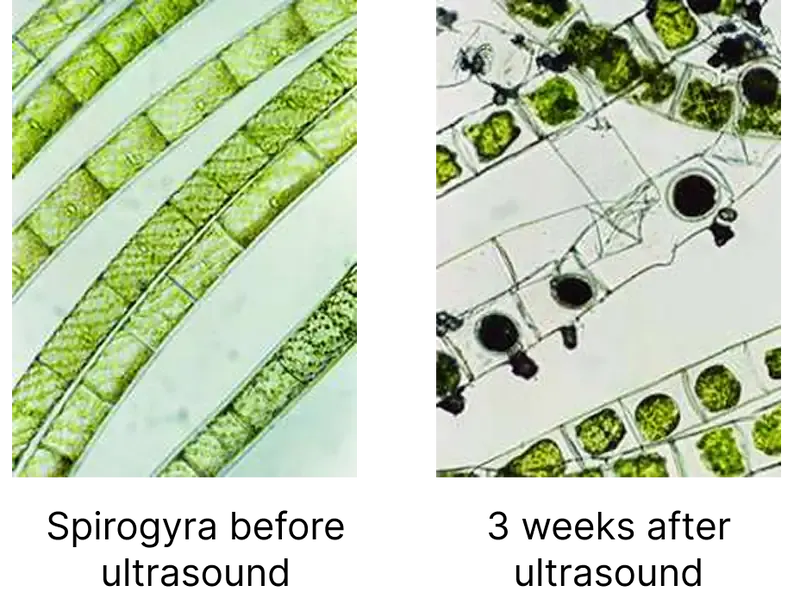
In blue-green algae, resonance collapses the gas vesicles that control buoyancy, so the cells sink below the photic zone where they can no longer photosynthesise. In green algae, ultrasound disrupts the cell membrane itself, leading to a gradual breakdown over three to four weeks.
- The first challenge: identifying the precise frequencies that work across many species of algae and biofilm
- The second: delivering those frequencies at the right range and intensity to get results
Thousands of frequencies, not a few
With more than a million estimated species of algae, one frequency does not fit all. Early ultrasonic systems relied on just a few. Today's leading technology, built on pioneering work by George Hutchinson, regarded as the father of modern ultrasonic algae treatment, uses more than 4,000 carefully tuned frequencies. Some rupture gas vesicles in blue-green algae; others interfere with cell walls or reproduction. In many cases effects begin within 24 hours.
Proximity matters. Sound has to reach the algae within a set range, typically 70 to 400 metres depending on the organism and the water body. On larger water bodies, units are deployed in multiples so their circles of coverage overlap.
Critical structural resonance
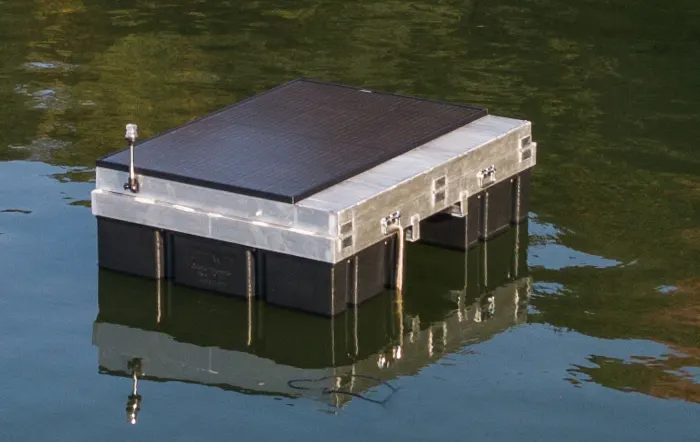
Ultrasonic transducers generate sound-pressure frequencies that make the water inhospitable to micro-organisms by inducing critical structural resonance. A broad frequency bandwidth reaches organisms of different sizes, shapes and structures, including cyanobacteria, green algae (chlorophyta) and diatoms, as well as biofilm.
Ultrasound and biofilm
Biofilm shields itself in a porous, adhesive matrix and thrives in still water, but it is highly sensitive to movement. Ultrasonic vibration creates the perception of constant water flow. That simulated turbulence interferes with attachment, disrupts early colonisation and helps prevent the build-up of sludge, organic matter and bacterial layers on surfaces.
Not all ultrasonics are the same
The key difference is not simply "ultrasound". It is the number of usable target points and how closely they are spaced. The SonicPure Pulsar 4400 uses more than 4,400 frequencies with 10 Hz spacing in the key upper range, four direct-wave transducers for continuous 360° output, and no species programs to change. Systems with a handful of frequencies leave gaps that resistant species fill.
Why cavitation matters
Older head-and-tail-mass designs rely on cavitation, which ruptures algae cells. With a toxic bloom that can release toxins suddenly. The Pulsar is designed to affect algae without cell rupture, so it does not harm desirable aquatic life when correctly installed and operated.
Safe for everything but algae
Properly done, ultrasound has no harmful effect on animals, fish, birds, people or beneficial aquatic plants. It is also not effective on algae that behave like plants, such as Pithophora, Chara, Nitella and Hydrodictyon, so those need a different approach.
The advantages
- Nothing is added to the water, so there are no chemicals to store, handle or record
- No harmful by-products, and no genetic mutation of surviving species
- Simple installation with minimal maintenance
- Low running cost: our US partner SonicPure quotes under 50 watts for the transmitter
- Quiet operation; most of the output is inaudible to people
- Less reliance on algaecides and copper
One tool in the toolbox
Ultrasound is an alternative to chemicals such as copper sulfate, but it works best as part of a plan. Combined with circulation, nutrient treatment and monitoring it covers what ultrasound alone cannot, which is why we design multi-stage programs for each site.
Monitoring
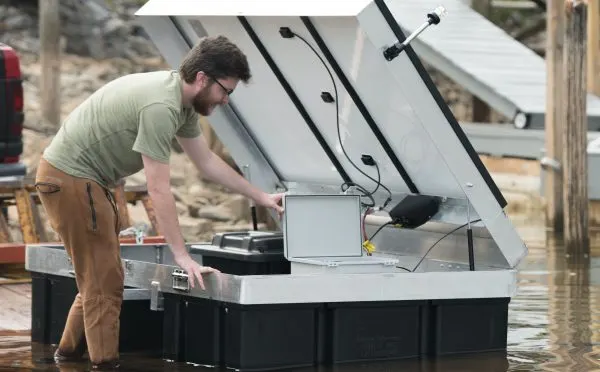
Onboard telemetry sends performance data to the cloud, so operation can be checked without waiting for a site visit. Read our client comparison guide for the detail.

More from Algae 101
- Algae and biofilm primerWhat algae and biofilm are, why they take over and why they are so hard to shift
- Algae and biofilm challengesWhat untreated algae and biofilm cost, why chemicals backfire, and a different approach
- Multi-stage remediationDisrupt, circulate, rebalance and monitor: why we combine approaches
Guides
- Blue-green algae in a farm dam: what to do
- Algae in a golf course irrigation lake
- Algae alert levels: green, amber and red, and what to do at each
- How to clear a dam or pond without chemicals
- The algae control guideChemicals, aeration and ultrasound compared
Compare the ultrasonic systems
Frequency density, coverage, cavitation and monitoring, side by side.
Download the comparison guide →We're here to help
Algae won't solve itself, but we can. Look through our case studies and resources to see results in action, or talk to us about your water.