
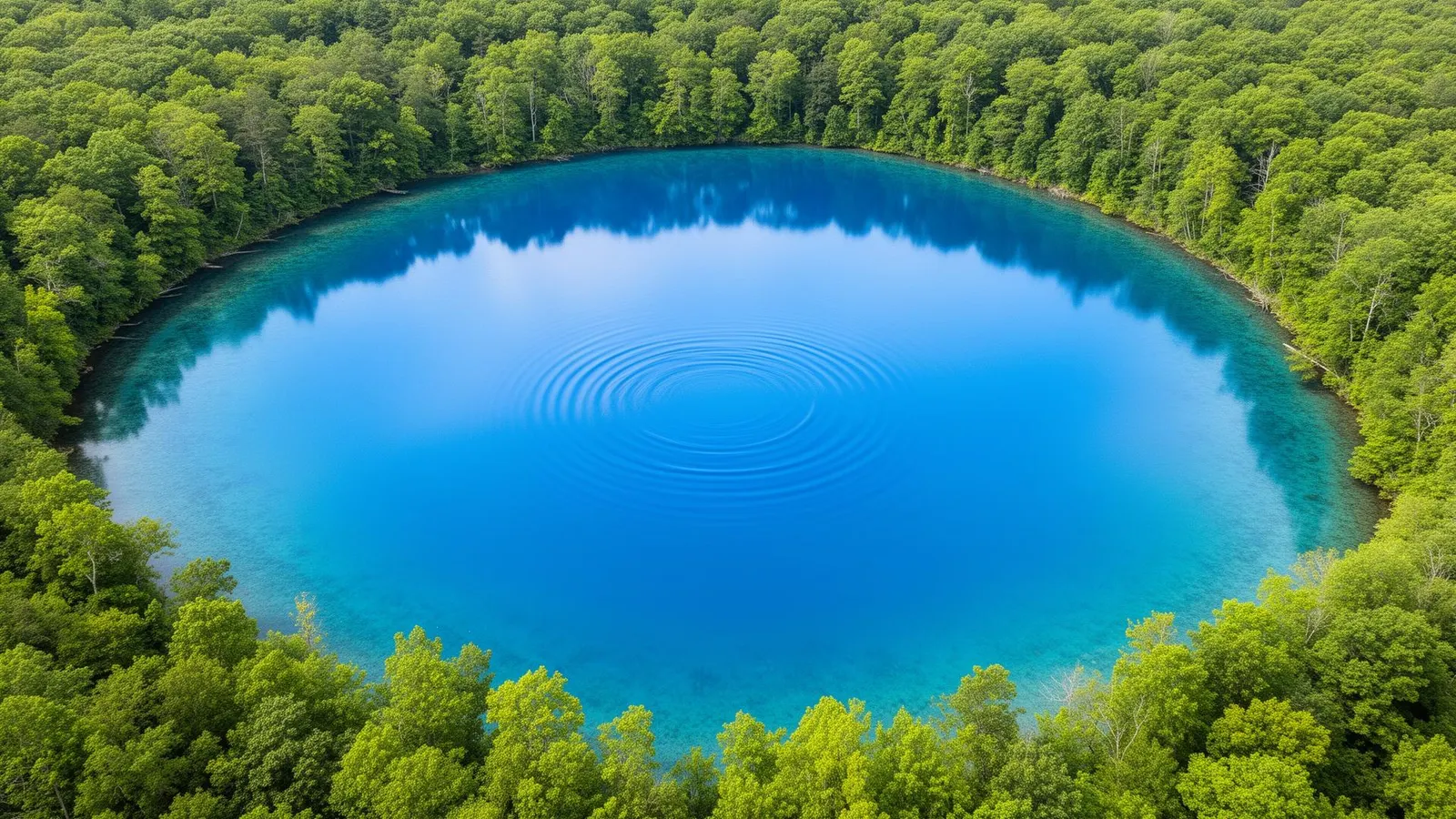

Restored water, naturally.
How ultrasonics works
4,400
Discrete ultrasonic frequencies
400 m
Radial range for blue-green algae
7–10
Days to visible impact
0
Chemicals. Ever.
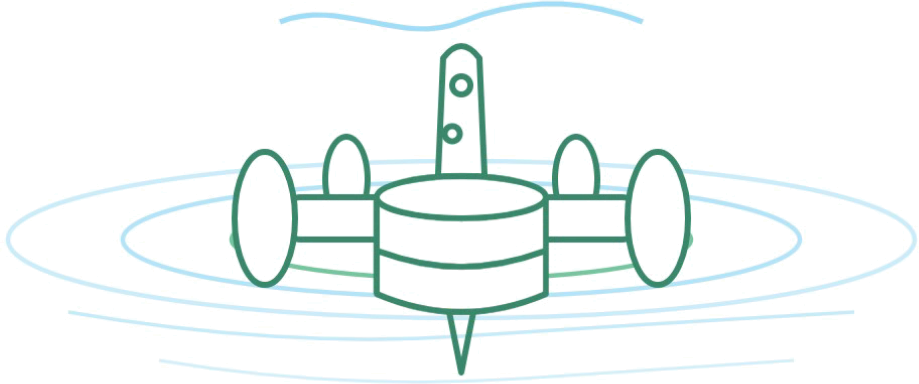
What ultrasound actually does to an algal cell
Algae survive by staying buoyant. Most species, especially blue-green algae (cyanobacteria), do this with gas vesicles: hollow, protein-shelled cylinders that set the cell's position in the water column. The Pulsar 4400 emits ultrasonic frequencies that match the resonant frequency of those vesicles. The acoustic pressure makes the vesicle walls vibrate, crack and collapse for good. Without buoyancy, the algae sink. Without light, photosynthesis stops, and the cell dies.
Critically, the gas vesicle collapses before the cell membrane ruptures. Toxins such as microcystin stay trapped inside the dying cell and degrade naturally on the bottom rather than being released into the water. That is fundamentally different from algaecides, which rupture cells and can trigger a toxin release.
Technical detail: acoustic resonance and vesicle collapse
Gas vesicles in cyanobacteria are rigid protein structures, typically 75–200 nm across, that collapse at pressures of 0.3–1.0 MPa depending on species. Sustained ultrasound at matched frequencies creates oscillating pressure fields above that threshold, causing irreversible failure.
Different species have vesicles of different sizes, and one frequency only targets a narrow range. With 4,400 frequencies across two bands, the Pulsar 4400 addresses blue-green, green and golden algae and dinoflagellates at once.
Green algae and diatoms don't rely on gas vesicles. Sustained ultrasound stresses their cell membranes and disrupts cell division instead, which takes longer, typically three to four weeks.
The system operates below the cavitation threshold and doesn't change the water temperature, which matters in aquaculture and drinking water.
Video: our US partner SonicPure
- 1
Emit
The Pulsar 4400 broadcasts 4,400 targeted ultrasonic frequencies in a 360° pattern from four transducer heads, 24 hours a day.
- 2
Resonate and collapse
Frequencies matched to the size of algal gas vesicles make them resonate. The vesicle walls crack and collapse under acoustic pressure.
- 3
Sink without releasing toxins
Without buoyancy, algae sink intact. Cell membranes stay whole, so toxins stay inside and degrade naturally.
- 4
Die, with no rebound
Deprived of sunlight, photosynthesis stops and the cell dies. Beneficial bacteria are unharmed: no phosphorus spike, no rebound bloom.
Continuous operation, around the clock
What we mean: we design the power system for your site before a unit is ever ordered.
Ultrasonic algae control only works if it runs continuously. Algae don't take weekends off, and vesicle disruption is cumulative: sustained pressure is needed to stop new vesicles forming and keep the population falling. A system that runs eight hours a day fails.
So power is designed as part of the job, not as an afterthought. During the site assessment we look at mains access, cable runs, sun exposure and whether the unit sits on the shore or on the water. That sets the configuration.
Technical detail: duty cycles and power
The Pulsar 4400 runs on 24 V DC with low continuous draw, so it suits modest solar systems, even in cooler climates.
Sentinel AIQ and shoreline solar systems are sized for several days of battery reserve (typically three to five), so cloudy spells don't interrupt treatment.
Where there is mains power, an AC power hub converts 240 V to 24 V DC. It is the highest-reliability option, suited to treatment plants, drinking water storages and indoor industrial sites.
Power status is reported in real time. If power drops, the system logs it and alerts both our support team and the site operator.

Shoreline solar
Panel and battery on shore, cable run to a floating Pulsar. Best where there is no mains power and a cable run is feasible.

AC power hub
Converts 240 V mains to 24 V DC. The highest-uptime option, and the standard for treatment plants and drinking water storages.
Sentinel AIQ
An integrated solar platform on the water, for large or remote water bodies where shore cable runs aren't feasible.
Sentinel AIQ+
The on-water platform with expanded battery reserve and full water quality sensor integration for remote deployments.
Why continuous operation is non-negotiable
Blue-green algae can rebuild gas vesicles within hours once the acoustic pressure stops. A 16-hour gap between treatments is enough for the population to partly recover. The 7–10 day timeline assumes uninterrupted operation.
4,400 frequencies target algae with precision
What we mean: every frequency maps to a specific algal structure. More frequencies cover more species, more effectively, not a wider shotgun blast.
Many ultrasonic systems run on a handful of frequencies, sometimes as few as three. That can work when one species dominates a bloom, but real water bodies rarely behave that way. A storage with a mixed bloom of blue-green and green algae needs a system that targets both at once, at the right intensities.
The Pulsar 4400 uses 4,400 discrete frequencies in two bands. The lower band targets the gas vesicles of common blue-green genera such as Microcystis, Aphanizomenon, Anabaena and Planktothrix. The upper band targets green algae, golden algae and dinoflagellates. Within each band, frequencies are swept continuously so populations can't adapt.
Technical detail: frequency bands
Lower band: tuned to the collapse range of gas vesicles in Microcystis aeruginosa, Aphanizomenon flos-aquae, Anabaena/Dolichospermum and Planktothrix agardhii.
Upper band: targets membrane integrity and organelle function in eukaryotic algae, including Chlorella, Spirogyra, Prymnesium parvum (the golden alga behind fish kills) and dinoflagellates.
Sweeping frequencies in sequence within each band prevents algae developing tolerance, a documented limitation of older single-frequency systems.
4,400
Discrete frequencies across two targeting bands
4
Transducer heads at 90°, for full 360° coverage
No chemicals required
What we mean: not just a chemical-free treatment, but a different way of killing algae that leaves the ecosystem intact afterwards.
Chemical algaecides, copper sulphate in particular, kill algae by poisoning them. Copper doesn't distinguish between harmful algae and beneficial bacteria, it builds up in sediment with every application, it needs full PPE to apply, and it triggers rebound: dead algae release their phosphorus, often fuelling a worse bloom within weeks.
Ultrasound works mechanically. Nothing enters the water and no residue builds up. Beneficial bacteria survive, and the phosphorus locked inside sinking cells breaks down slowly on the bottom rather than as a sudden pulse.
Technical detail: compliance and downstream effects
Nothing is added to the water: no withholding period and no conflict with organic certification for irrigation water.
Fish, prawns and invertebrates are unaffected, which matters in aquaculture and on recreational lakes that can't be closed.
In drinking water and wastewater, there is no treatment chemical to account for in downstream dosing, and no algaecide handling, storage or application records.
The rebound problem, and why ultrasound avoids it
When chemicals kill algae, cell membranes burst and release the phosphorus inside, which can raise total phosphorus several-fold within days. That spike feeds the next bloom. With ultrasound, cells sink intact and their phosphorus breaks down gradually.
Results visible in 7–10 days
What we mean: measurable chlorophyll-a reduction and clearer water within 7–10 days for blue-green algae under continuous operation. Other species work to different timelines, and we tell you what to expect for yours.
The 7–10 day figure is specific to blue-green algae. It reflects how long it takes for enough of the population to lose buoyancy, sink and die without light. Throughout, the system reports water quality, including chlorophyll-a and phycocyanin (specific to blue-green algae), so you track results in numbers from day one, not just by eye.
Sites with heavier nutrient loads or several algae species follow a more complex path. We set those expectations during the site assessment, not after installation.
Technical detail: what drives the timeline, and what can slow it
Vesicle collapse is immediate for cells in the direct acoustic field, but blue-green algae span the full depth. Cells further away are affected more slowly as acoustic energy fades with distance and depth.
Things that slow results: very high starting biomass; ongoing nutrient inflows such as farm runoff or stormwater; strongly stratified water; and mixed blooms where green algae follow their own three-to-four-week timeline.
In documented deployments, chlorophyll-a reductions of 30–70% in the first two weeks are common, surface scum stops forming within days, and odour from decaying mats clears within one to two weeks.
Day 1
Gas vesicle disruption begins
Cells in the direct acoustic field start losing buoyancy. Chlorophyll-a and phycocyanin baselines are logged from day one.
Days 7–10
Visible impact on surface blooms
Blue-green surface accumulations diminish, clarity improves measurably and odour events stop.
Weeks 3–4
Cellular disruption takes effect
Green algae and diatoms, which lack gas vesicles, are disrupted through membrane stress.
Ongoing
Prevention from day one
New biofilm attachment is prevented immediately; existing biofilm degrades over two to four weeks.
360° radial coverage
What we mean: four heads at 90° broadcast at once, so there are no acoustic shadow zones. We calculate unit numbers for your site from these ranges.
Coverage depends on the algae, because the mechanism differs. Collapsing gas vesicles in blue-green algae takes less acoustic energy than disrupting green algae cells, so a unit covers far more area for blue-green algae. For irregular water bodies, shoreline installations or sites with several bays, we work out the best placement during the site assessment and show you a coverage map before installation.
Coverage isn't all-or-nothing. Intensity falls with distance, and the published ranges mark the minimum for consistent results. Sites near the edge of a range take longer; on large water bodies, overlapping units speed up results at the margins.
Technical detail: placement and multi-unit sites
For L-shaped ponds, storages with coves or water bodies with islands, off-centre or multi-point placement may be specified on the coverage map.
Where a water body is bigger than one unit covers, several units are installed with deliberate overlap, which speeds treatment at the boundaries.
The Pulsar works best in the top two to four metres, where blue-green algae gather. Deeper populations are dealt with indirectly as the surface population dies and stops shading them.
The 60 m biofilm range applies to submerged surfaces such as pipe interiors, clarifier walls and tank surfaces. Enclosed pipe systems may suit an in-line configuration.
Radial range per Pulsar 4400
- Blue-green algae
- 400 m
- Green algae
- 150 m
- Biofilm
- 60 m
Ranges depend on water body shape, depth, obstructions and algae type.
Three components. One connected platform.
Pulsar 4400
Four-head transducer array broadcasting 4,400 frequencies across two bands, 24 hours a day, with full telemetry.
- 4,400 frequencies across 2 bands
- 4 transducer heads at 90°
- 400 m radial (blue-green algae)
- 150 m radial (green algae)
- 60 m radial (biofilm)
- 24 V DC: mains, solar or on-water
- Non-mechanical anti-fouling
Water quality probes
In-water sensors that give a before, during and after picture of treatment, logged automatically.
- Two-sensor probe: chlorophyll-a, phycocyanin
- Eight-sensor probe: adds ORP, pH, DO, turbidity, conductivity, temperature
- Logged to the cloud dashboard automatically
- On Sentinel AIQ platforms or standalone
- Data export for reporting
Cloud dashboard
System status, performance, water quality data and alerts, on any device.
- Real-time alerts for power, connectivity and sync
- Water quality dashboards with history
- Tiered access for site operators and our support team
- Works standalone or with existing systems
The Pulsar reports its status every few minutes, and water quality probes log readings every 15 to 60 minutes. Both appear on the same dashboard. If power drops, the connection is lost or a water quality reading crosses a threshold, the system sends an alert.
Results with a name and a number

Teton Pines
Ultrasound clears algae at Teton Pines, restoring clean, scenic ponds.
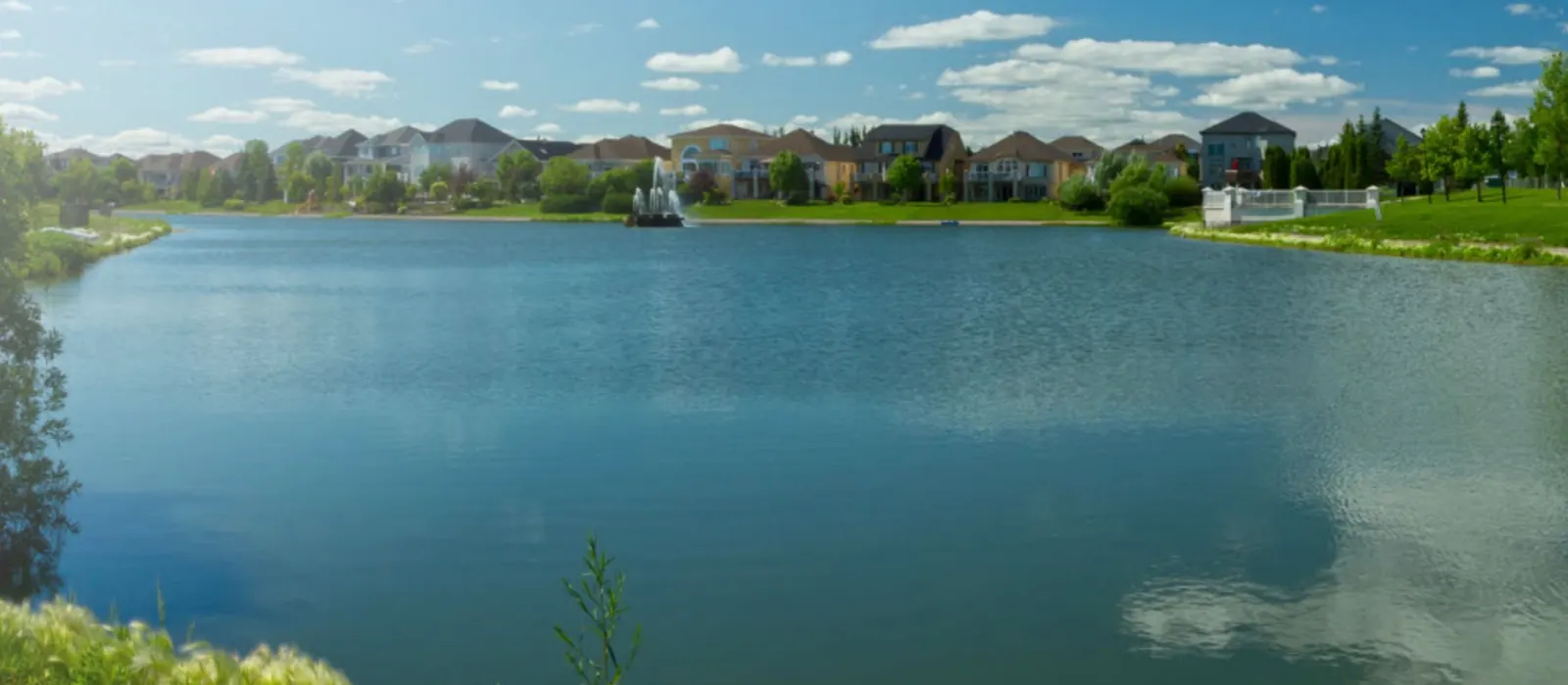
Ginger Cove HOA
Residents impressed as Ginger Cove lake’s quality and clarity look better than it has in 40 years
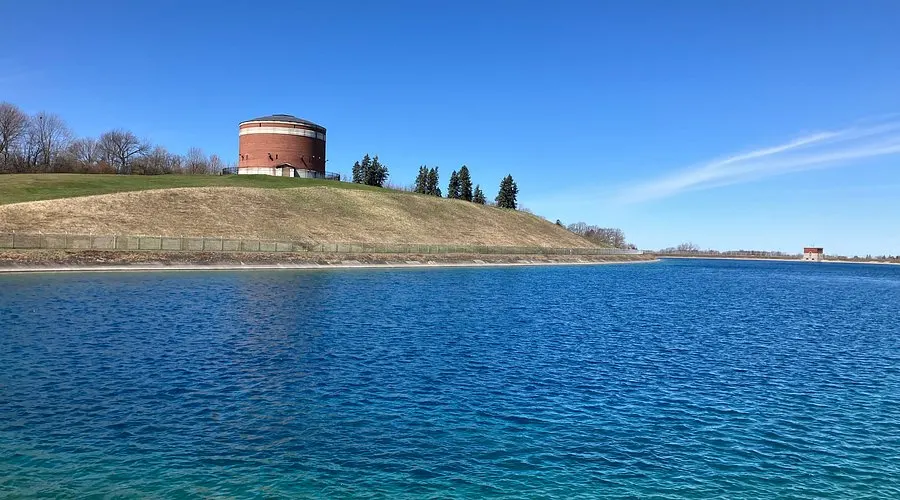
Woodland Reservoir
Woodland Reservoir Ends Copper Use with ROI in Under 2 Years

Ready to take back control of your water?
Our team is ready to look at your water: its size, depth, algae and power. Tell us about your site and we will recommend the right system.