

Lo Méndez Lagoon
Lake Lo Méndez, Chile
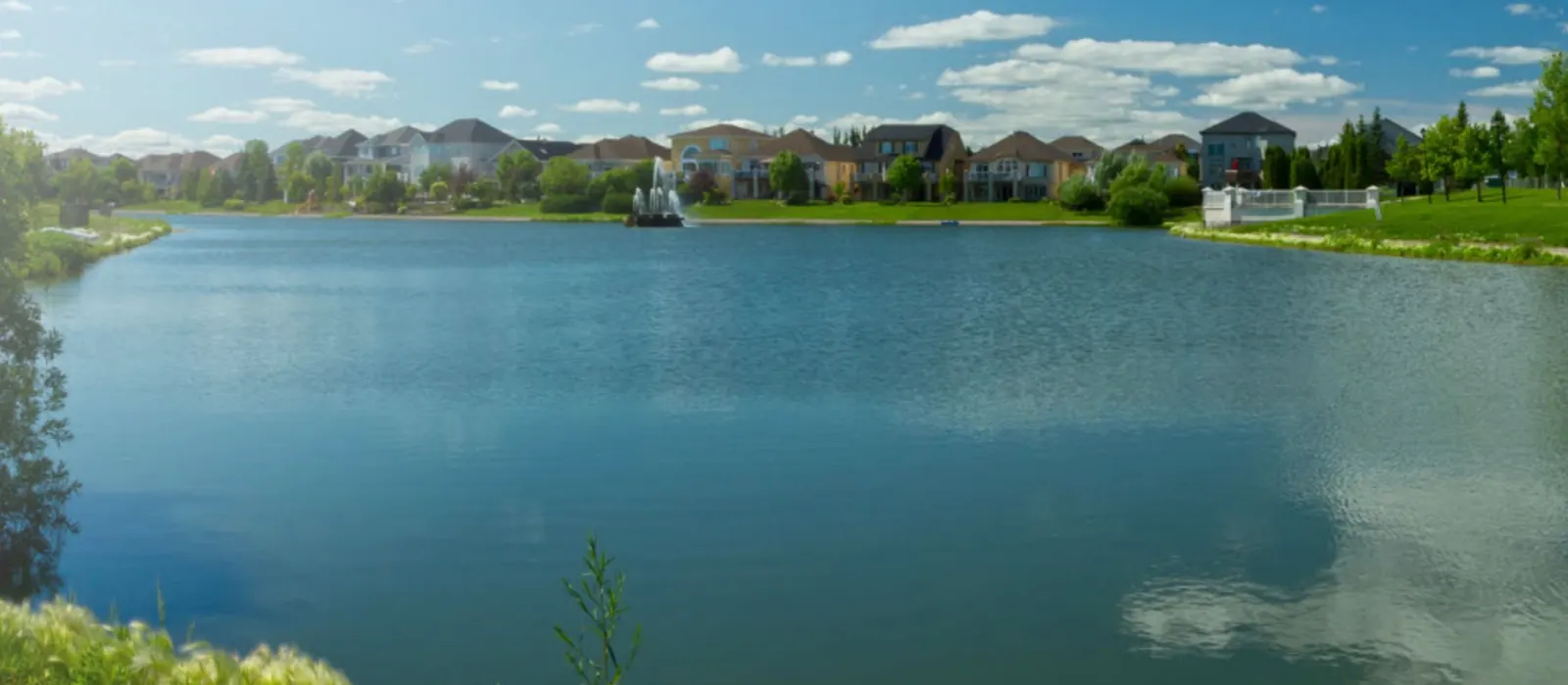
A Pulsar 4400 unit proved effective in controlling harmful algal blooms in Lo Méndez Lagoon.
- Location
- Lake Lo Méndez, Chile
- Surface
- 4.2 km²
- Volumen
- 157,800 m³
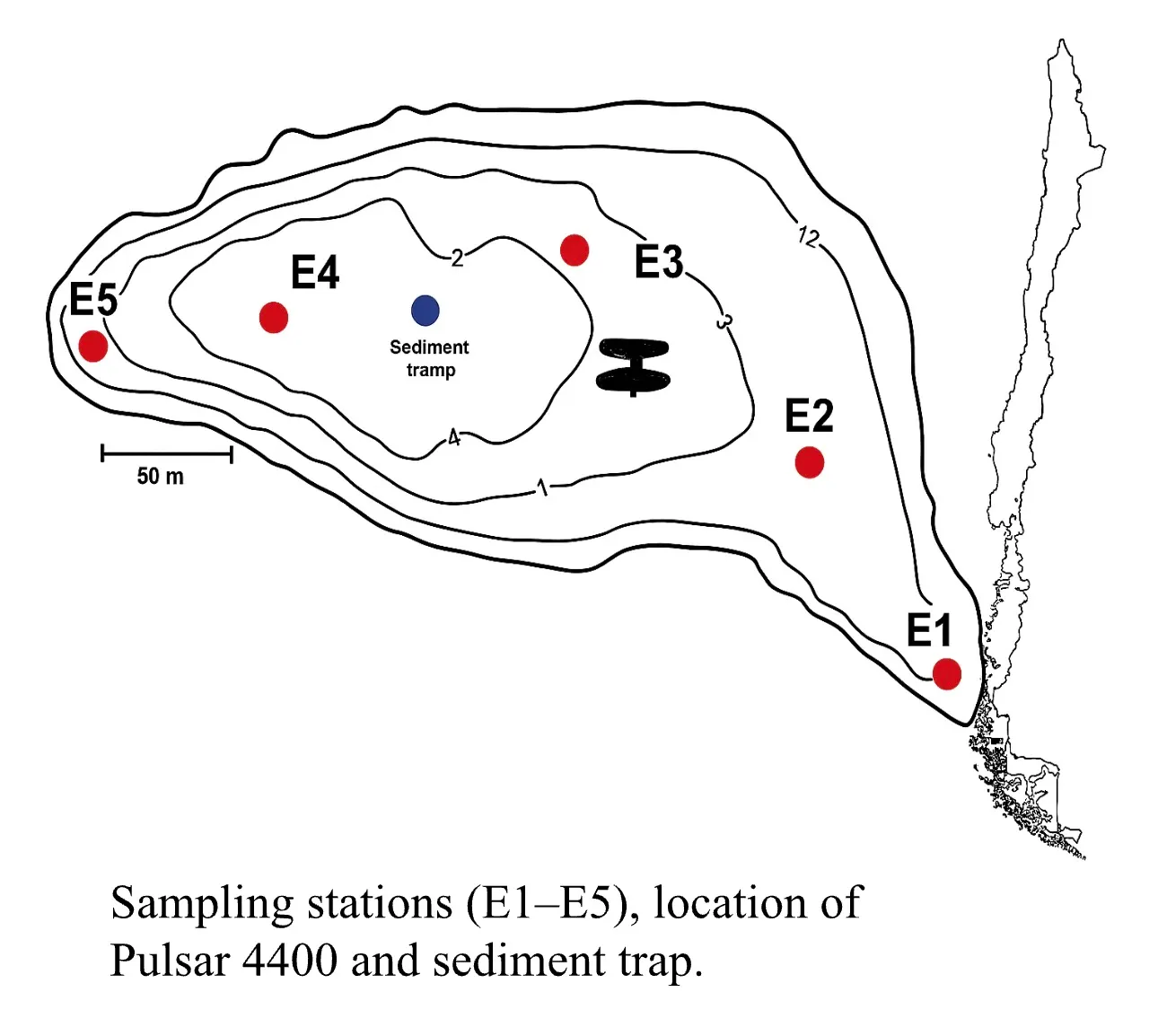
Methodology
- Equipment: 1 Pulsar 4400 unit installed at the center of the lagoon, operating for 9 months (from September 2024 to May 2025).
- Monitoring: 5 stations distributed along a transect, with 6 sampling campaigns.
- Parameters: Phytoplankton (Utermöhl method) and water quality (pH, oxygen, turbidity, nutrients, transparency).
- Sedimentation: Use of a cylindrical trap at the bottom to measure accumulation rates and characterize the sedimented material.
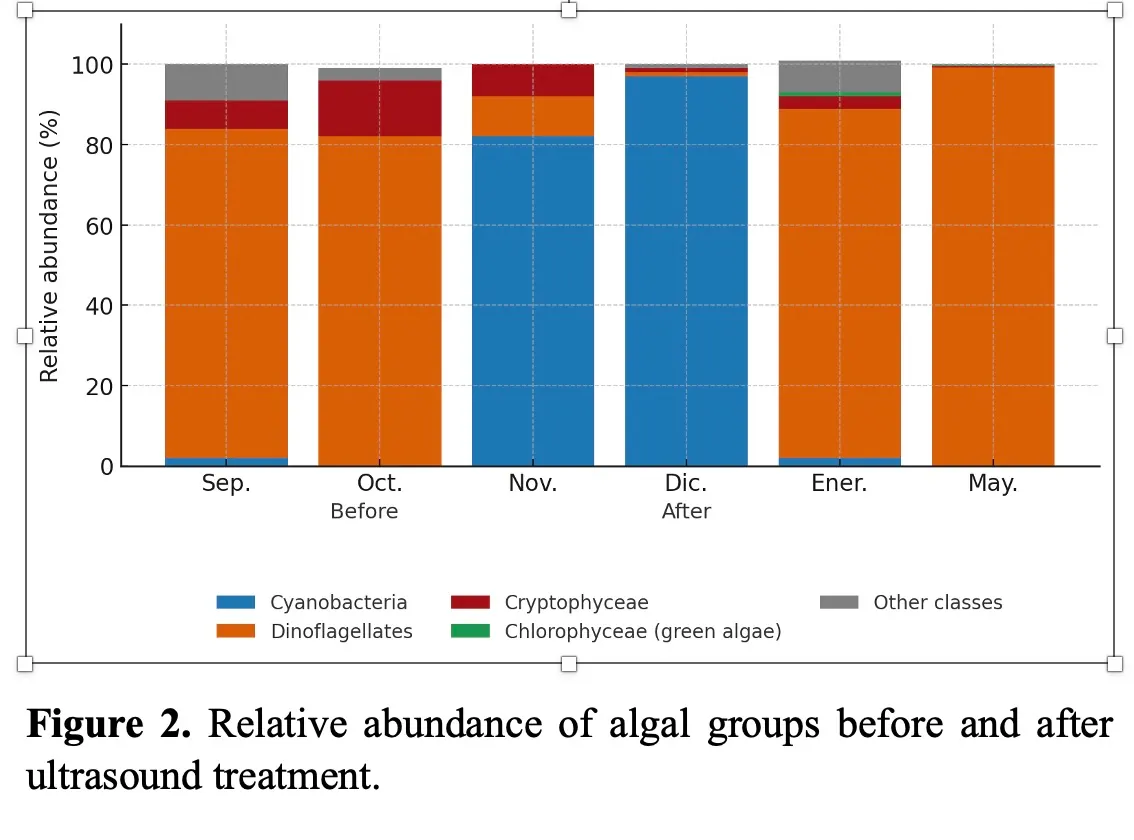
Dinoflagellates Control
Peridinium sp., dominant at the beginning of the pilot study, showed a 98% reduction after two months of application.
A moderate increase of Ceratium furcoides was recorded towards May, although it did not reach critical densities as reported in the historical records of the lake.
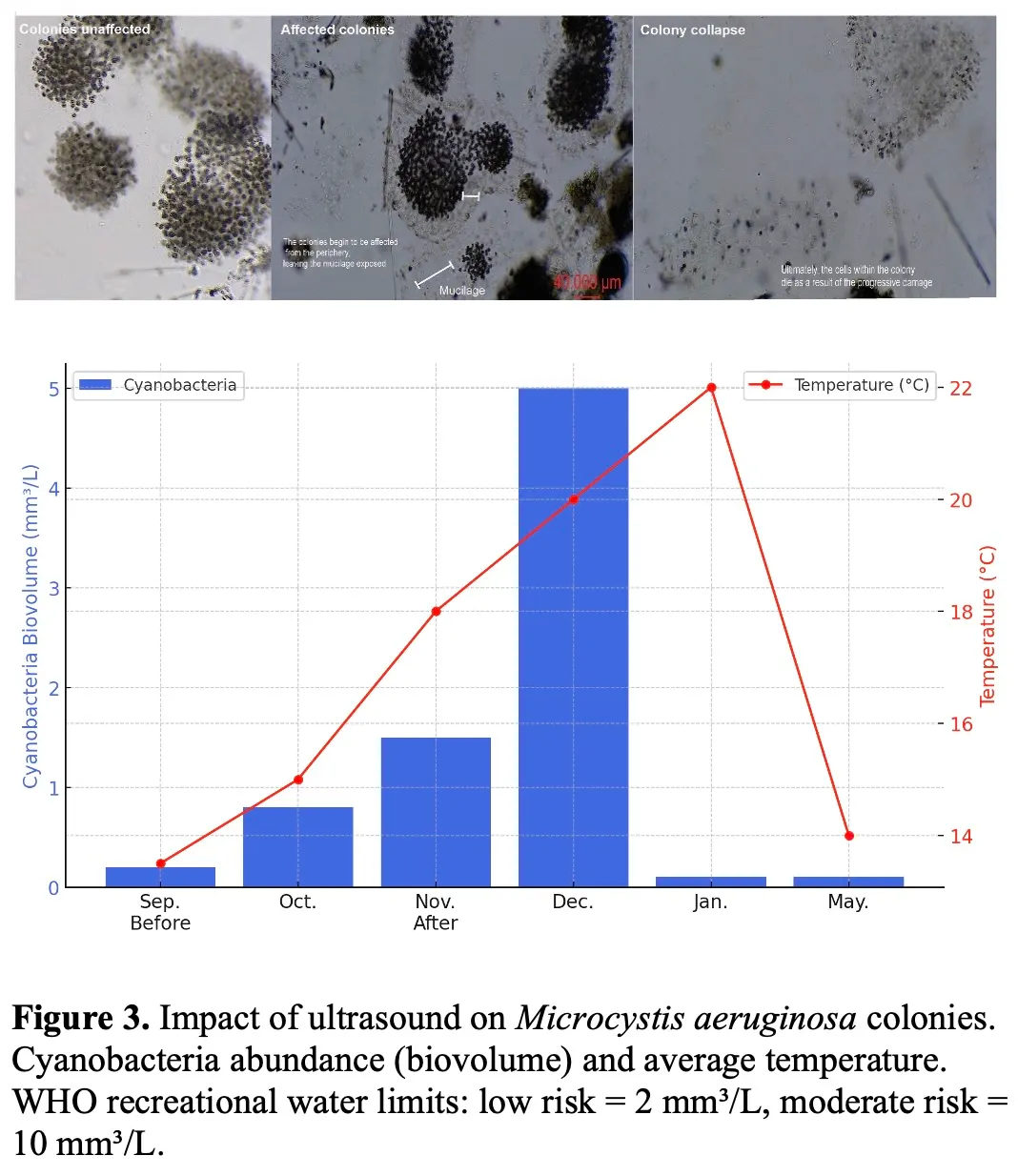
Cyanobacteria Control
Between November and December, a bloom of Microcystis aeruginosaoccurred, coinciding with an average water temperature of 20 °C.
In January, despite reaching the highest average temperature of theperiod (22 °C), a 99% reduction in the biovolume of Microcystis aeruginosawas recorded.
Before and after the bloom event, Microcystis ichthyoblabe wasdetected at low abundances.
Ultrasound affected the gas vesicles of Microcystis aeruginosa,reducing its buoyancy and altering the cellular and colonial structure, whichprevented the reorganization of colonies.
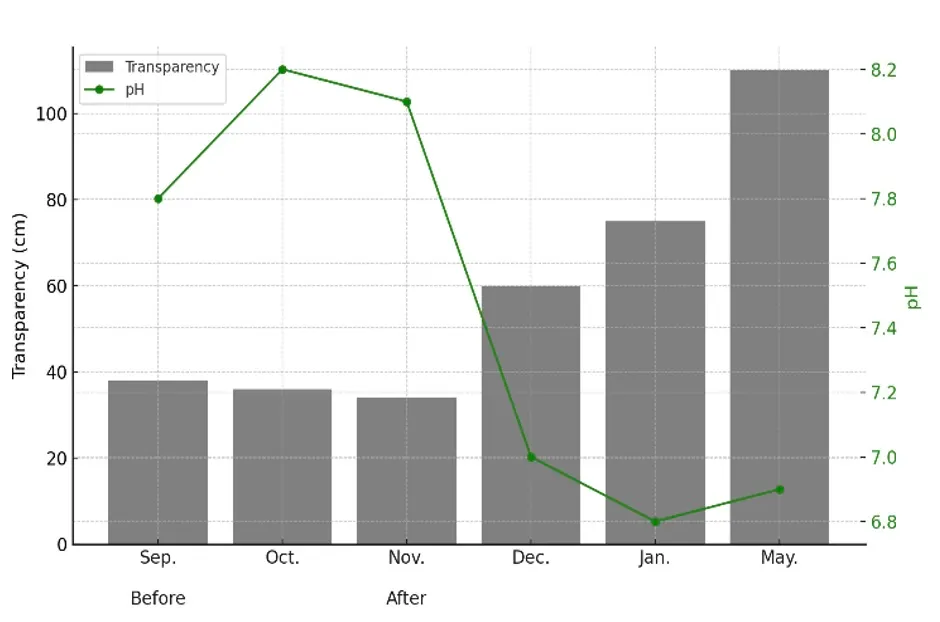
Dinoflagellates Control
Transparency increased progressively, reaching 110 cmin May, accompanied by a decrease in turbidity and a trend of pH values towardneutrality.
No negative impacts were detected on otherphysicochemical parameters, such as dissolved oxygen, conductivity, ornutrients (phosphorus and nitrogen).
Figure 4. Water transparency and pHduring the study period.
Sedimentation
In December, coinciding with the bloom, an increase in the sedimentation rate was recorded (6.35 cm/day and 0.11 cm³/day). During the rest of the period, rates remained low and stable (≤1 cm/day), consistent with eutrophic systems.
Conclusion:
- A single Pulsar 4400 unit was sufficient to treat the water column in a shallow lake (max. depth: 6.5 m; surface area: 4.2 km²; avg. volume: 157,800 m³).
- A reduction of 99% in Microcystis and 98% in Peridinium was achieved in the short term.
- An increase in phytoplankton diversity and a reduction of problematic species were recorded.
- No adverse effects on water quality were observed.
These results confirm that ultrasound is a safe, effective, and sustainable solution to control algae and improve water quality in urban lakes. To achieve long-term impact, we recommend complementing this technology with nutrient management solutions, such as constructed wetlands and beneficial bacteria.
This is shared with permission from our US partner SonicPure. Algae Control Australia is SonicPure's sole authorised distributor in Australia and the Asia-Pacific, so the same technology is available here with local design, installation and support. View the original.
More partner case studies




A site like this one in Australia?
The same SonicPure technology is available here, designed, installed and monitored by our team. Tell us about your water body.