

Algae alert levels: green, amber and red, and what to do at each
The three levels
- Green alert: low cyanobacteria levels detected. Routine monitoring continues.
- Amber alert: levels are rising. Monitoring increases and warnings may be issued.
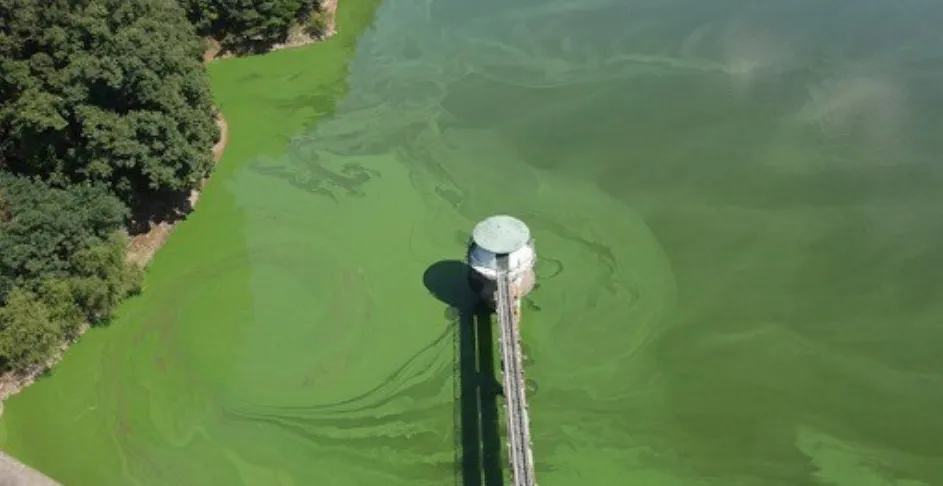
- Red alert: high levels or visible scum. Water is unsafe for contact and sites are often closed.
What the numbers mean
Laboratories report cyanobacteria as cells per millilitre and as biovolume in cubic millimetres per litre, by species. Toxigenic species such as Dolichospermum circinale and Microcystis are the ones that trigger closures. At Harrietville the lab recorded 35,900 cells/mL of Dolichospermum circinale and a biovolume of 8.975 mm³/L; after treatment the biovolume was 0.002 mm³/L, far below the 10 mm³/L trigger, with only non-toxic species remaining.
Responding early
We work alongside each client's own water testing regime. Laboratory results taken weekly or fortnightly let us track alert levels on site and respond as conditions change. Continuous ultrasonic treatment is there before the bloom, not after it; live sensors on a Sentinel AIQ+ report blue-green algae, chlorophyll-a, dissolved oxygen, pH and more to a dashboard on any device.
If you are already at red
Keep the water closed, keep testing, and treat the cause. A single Pulsar at Harrietville took a red-alert water body to zero toxic cyanobacteria within the season, confirmed by independent tests. Ask us for the full data.
More from Algae 101
- Algae and biofilm primerWhat algae and biofilm are, why they take over and why they are so hard to shift
- Introduction to ultrasoundHow ultrasonic algae control works, and what makes one system different from another
- Algae and biofilm challengesWhat untreated algae and biofilm cost, why chemicals backfire, and a different approach
- Multi-stage remediationDisrupt, circulate, rebalance and monitor: why we combine approaches
Guides
- Blue-green algae in a farm dam: what to do
- Algae in a golf course irrigation lake
- How to clear a dam or pond without chemicals
- The algae control guideChemicals, aeration and ultrasound compared
Compare the ultrasonic systems
Frequency density, coverage, cavitation and monitoring, side by side.
Download the comparison guide →We're here to help
Algae won't solve itself, but we can. Look through our case studies and resources to see results in action, or talk to us about your water.