Mine-site algae, cyanobacteria and biofilm control without routine chemical shock treatment.
Algae Control Australia supports raw water, potable-water, process-water, CHPP, tailings, settling and evaporation ponds where algae, cyanobacteria, EPS, odour, turbidity, biofilm and high nutrient loads are affecting treatment efficiency and operational cost.
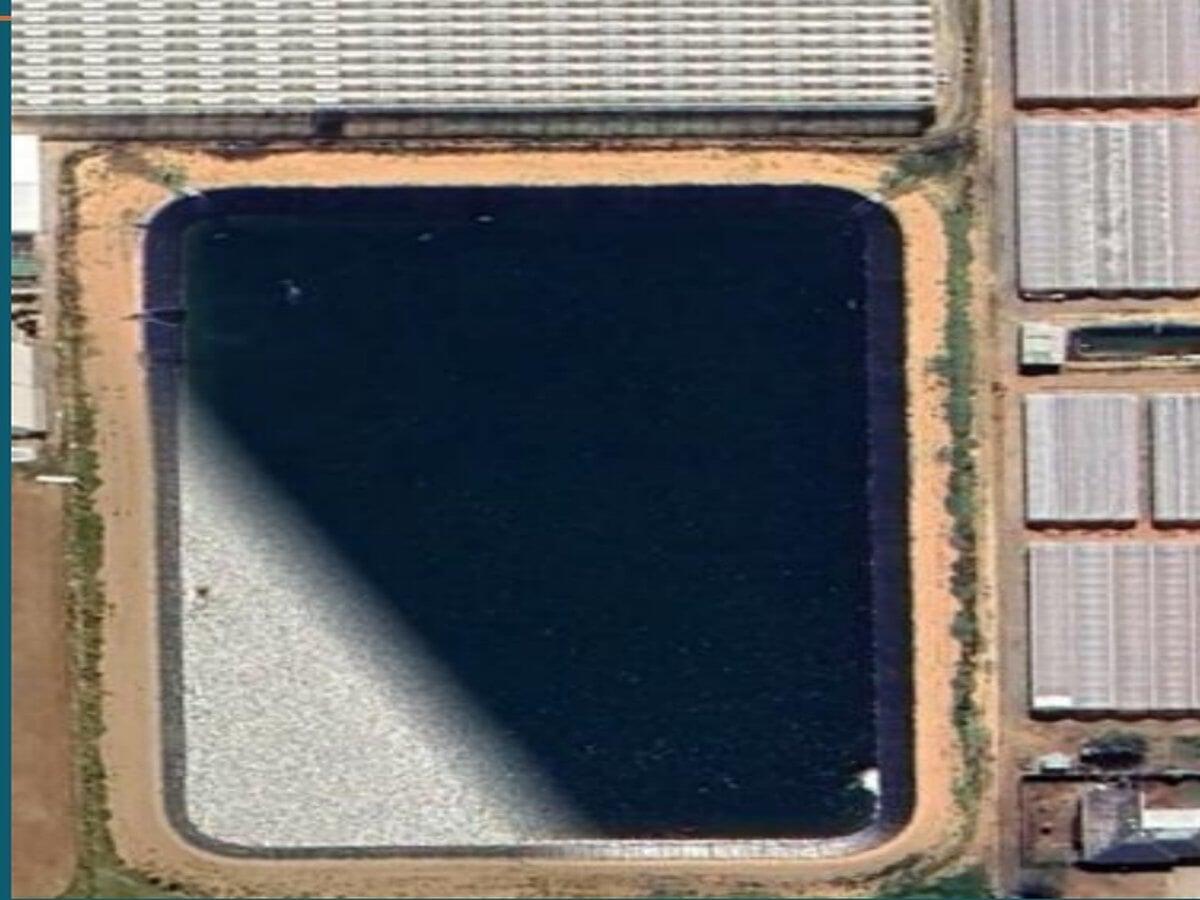
Algae and cyanobacteria create more than a green-water problem.
On mine sites, bloom growth can affect water handling, potable-water treatment, process-water clarity and CHPP performance. The issue is often not just the visible algae, but the sticky organic material released by algae and cyanobacteria.
EPS is a hidden operating cost
Extracellular Polymeric Substances, or EPS, bind fine particles, increase turbidity, clog filters, increase cleaning frequency and can drive up polymer and flocculant demand.
Common mine-site symptoms
- Green, blue-green or odorous surface water
- Biofilm on tanks, pipes, screens, pond edges and infrastructure
- Filter blockage and shortened cleaning cycles
- Poor settling performance in clarification and tailings ponds
- High turbidity, fine carry-over and polymer/flocculant pressure
- Recurring blooms following copper sulphate or peroxide treatment
- Thick benthic organic layers and nutrient-rich sludge
Designed for the waterbodies mines manage every day.
Raw and potable-water storages
Reduce algae and biofilm pressure before water reaches filtration, disinfection or potable-water treatment steps.
Process and recycled-water reservoirs
Improve water clarity and reduce recurring algae load in reuse systems and high-nutrient water circuits.
CHPP settling and clarification ponds
Support settling performance by targeting algae, cyanobacteria, EPS and biofilm that bind fines and increase turbidity.
Tailings and high-nutrient dams
Combine ultrasonic suppression with biological nutrient recovery where nutrient loads are extreme or legacy sludge is present.
Evaporation and holding ponds
Reduce nuisance growth, odour and biofilm in waterbodies that are difficult to treat manually or chemically.
Tanks, channels and transfer systems
Help control the biofilm foundation that allows algae and bacterial slimes to keep returning.
Ultrasonics for bloom pressure. PBE for the nutrient source.
The strongest mine-site strategy is often a paired approach: broad-spectrum ultrasonics to disrupt algae and cyanobacteria, and PBE to stimulate beneficial bacterial activity that consumes the organic load and helps shift the waterbody away from bloom-favouring conditions.
SonicPure Pulsar Ultrasonics
- Chemical-free targeting of cyanobacteria and problematic algae
- 4,400+ frequencies emitted continuously
- No species programming or retuning required
- Low-power, compact and solar-ready
- Wildlife safe and suited to remote sites
PBE — Prebiotic Bacteria Enhancer
- Consumes organic load that fuels recurring blooms
- Supports breakdown of existing EPS and biofilm
- Helps immobilise nitrogen and scavenge phosphorus into biology
- Supports sludge and benthic-layer reduction over time
- Useful where nutrient levels are extreme
A practical water-quality program built around measurable mine-site benefits.
Reduce blockages
Lower biofilm, algae and EPS pressure on filters, screens and water handling equipment.
Improve settling
Reduce fine binding and turbidity pressure in CHPP, clarification and tailings ponds.
Lower chemical reliance
Reduce or eliminate routine copper sulphate, peroxide and reactive algaecide cycles.
Support potable treatment
Reduce taste, odour, filter cleaning and algae-related treatment challenges upstream.
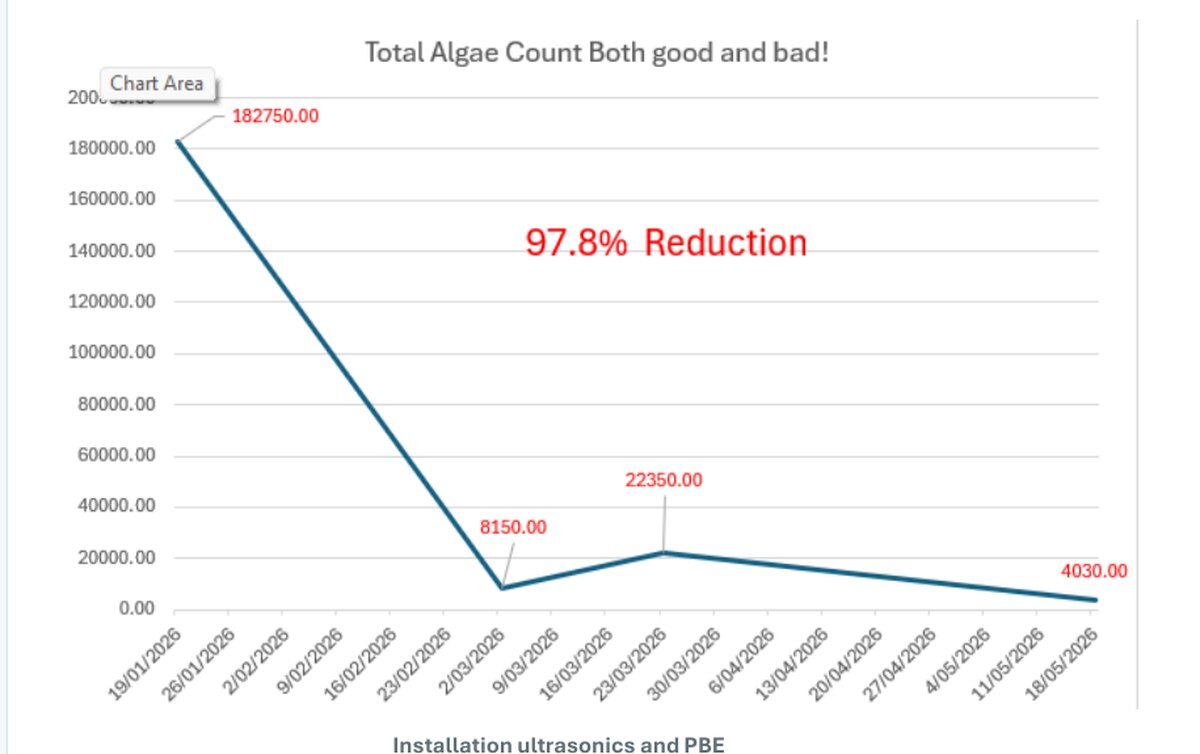
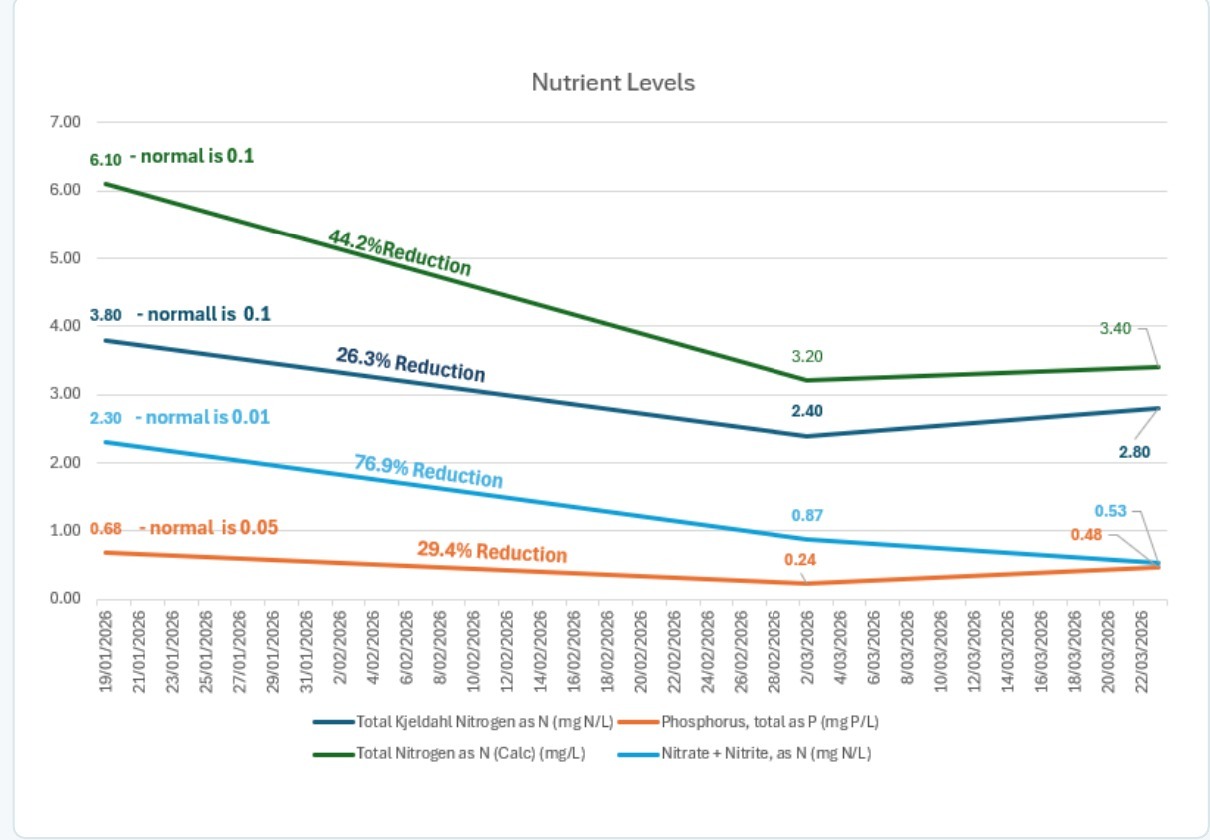
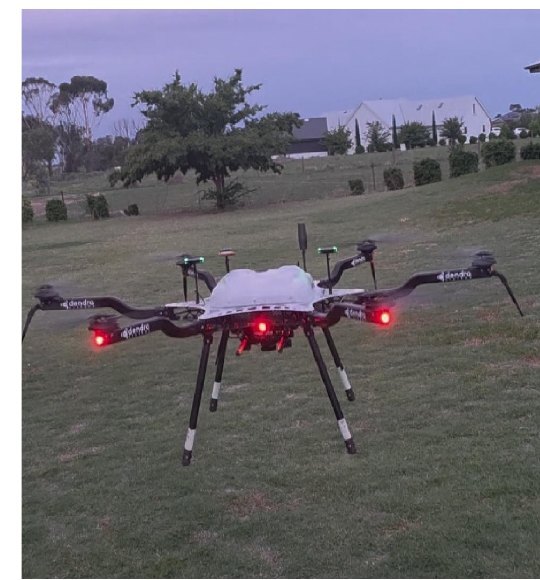
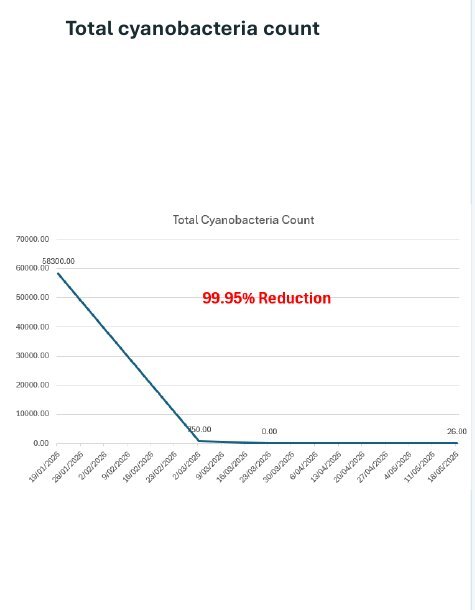
Certified algae reports turn treatment into a trackable program.
Algae Control Australia can use laboratory algae reports to confirm the dominant taxa, track cell-count trends, identify cyanobacteria and show whether nuisance organisms are reducing while the wider waterbody rebalances.
This matters because total algae counts alone can be misleading. A waterbody may show a shift away from harmful cyanobacteria toward less problematic green algae while nutrients continue to trend down.
A simple process for complex mine-site waterbodies.
Assess the waterbody
Review waterbody purpose, volume, depth, power availability, inflows, existing treatments, algae history and operational constraints.
Confirm the biology
Use certified algae reports and water-quality data to identify cyanobacteria, nuisance algae, nutrient drivers and treatment risk.
Design the treatment
Select ultrasonic coverage, PBE placement, optional biological support and solar or telemetry requirements.
Deploy with control
Install compact ultrasonic units and place PBE accurately across target zones for optimum treatment coverage.
Monitor the trend
Track cell counts, cyanobacteria, turbidity, odour, filter loading, nutrient pressure and visual recovery over time.
Refine for long-term stability
Adjust treatment intensity or biological support as the waterbody shifts from reactive algae control to stable water management.
Need a plan for a mine-site dam, CHPP pond, potable-water storage or high-nutrient waterbody?
Send through the location, approximate size, photos, current water-quality data and any algae reports. We can help identify the likely drivers and recommend a practical ultrasonic, PBE or combined recovery strategy.