PBE vs Phoslock
Why PBE(prebiotic Bacteria Enhancer) is the preferred choice for sustainable pond health
Both PBE and Phoslock are used to improve water quality and reduce the conditions that contribute to algae, but they take very different approaches.
Phoslock is primarily a phosphorus-binding material. It works by locking up soluble phosphorus in the water and sediment, reducing one of the nutrients that can fuel algal growth.
PBE, by contrast, is a biological solution designed to stimulate beneficial microbial activity. Rather than focusing on a single chemical interaction, it helps restore the pond's natural ability to break down organic waste, reduce sludge, and improve nutrient cycling. For many pond owners and managers, this makes PBE the more balanced and sustainable long-term approach.
Mechanism of Action
Phoslock works through chemical-physical binding. Its lanthanum-modified clay captures reactive phosphorus and removes it from circulation. This can be useful in systems with a known phosphorus problem, but it is a targeted intervention rather than a whole-of-pond solution.
PBE works biologically. It promotes beneficial bacteria that digest organic matter, reduce sludge accumulation, and naturally compete for nutrients that would otherwise contribute to poor water quality. This means PBE helps address the underlying biological imbalance that often drives recurring pond issues.
Why PBE offers a broader solution
One of the key advantages of PBE is that it supports the pond's own ecological processes. In many ponds, algae is not just a phosphorus problem. It is also linked to accumulated organic waste, sludge build-up, poor biological balance, and excess nutrient recycling from decomposing matter.
Because PBE works on these broader conditions, it can offer benefits beyond algae control alone. It helps improve overall water quality rather than simply immobilising one nutrient fraction. By supporting more balanced nutrient cycling across carbon, nitrogen, and phosphorus, PBE helps shift the pond away from nutrient imbalances that favour nuisance algae. It also helps reduce the excess nutrient loading that allows nuisance algae and aquatic weeds to exploit what is known as luxury nutrient uptake, where nutrients are absorbed and stored beyond immediate growth requirements. Over time, this helps move the system away from the conditions that favour persistent blooms and invasive weed pressure. It also helps reduce the excess nutrient loading that allows nuisance algae and aquatic weeds to exploit what is known as luxury nutrient uptake, where nutrients are absorbed and stored beyond immediate growth requirements. Over time, this helps move the system away from the conditions that favour persistent blooms and invasive weed pressure.
Unlike mineral phosphorus-binding treatments, PBE works without releasing chemicals into the water column. Instead, it supports beneficial microbial activity and more natural nutrient processing throughout the pond system.
Rather than adding a clay layer to the sediment, PBE also provides surfaces for microbial colonisation, helping strengthen the biological activity that supports breakdown of organic matter and healthier conditions at the sediment-water interface.
From a practical standpoint, PBE is also easy to position as an in-situ biological treatment, typically applied as blocks or pellets, whereas Phoslock is generally applied as a mineral slurry.
Because it supports broader microbial activity, PBE is not limited to phosphorus alone. It can also help address organic sludge and wider pollutant pressures, making it relevant not only for ponds and lakes but also for other managed aquatic environments where whole-system remediation is the goal.
Natural and sustainable pond management
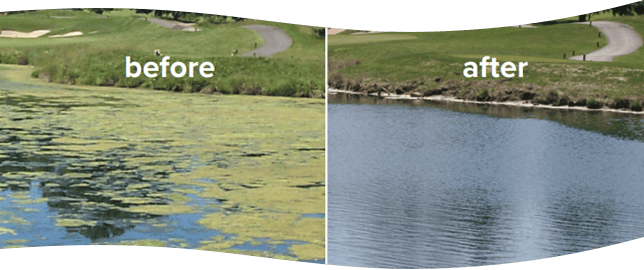
For pond managers looking for a more natural approach, PBE is often the preferred choice. It works with biology rather than relying on mineral binding agents. This makes it well suited to ornamental ponds, lifestyle water bodies, golf course ponds, and managed landscapes where long-term ecological balance matters as much as short-term nutrient reduction.
Rather than treating the pond as a chemistry problem to be corrected, PBE helps restore it as a living system.
Long-term practicality
While Phoslock is often used as a targeted remediation product, PBE is better aligned with ongoing pond care. It can be incorporated into a broader maintenance strategy focused on reducing organic load, maintaining clearer water, supporting beneficial bacteria, and limiting the conditions that allow nuisance algae and weeds to dominate.
Phoslock can often deliver visible results more quickly because it binds phosphorus directly, whereas PBE typically works more gradually as biology rebalances. That slower action, however, is also what makes PBE the more thorough whole-of-pond approach over time.
This can make PBE the more practical and sustainable choice for ponds that require continuing biological support rather than a one-off intervention.
Safety and environmental philosophy
Both products are generally presented as environmentally responsible when used correctly, but their philosophies differ.
Phoslock depends on an introduced binding material to immobilise phosphorus. PBE supports natural microbial processes already present in healthy aquatic systems. For managers who prefer biological treatment over mineral-style intervention, PBE is the more ecologically aligned option.
Best use case comparison
| Category | Phoslock | PBE |
| Primary approach | Phosphorus binding | Biological restoration |
| Main strength | Targeted phosphorus control | Whole-of-pond health support |
| Best suited for | Phosphorus specific remediation | Ongoing pond management and recovery |
| Broader benefits | Mainly nutrient immobilisation | Sludge reduction, nutrient cycling, water clarity, and better nutrient balance |
| Management philosophy | Intervention-based | Natural, biological, and sustainable |
Conclusion
Phoslock can be useful where phosphorus binding is the primary objective, particularly in ponds with a clearly identified soluble phosphorus load.
However, for most pond owners and managers seeking a more natural, holistic, and sustainable solution, PBE is the preferred approach. By supporting beneficial biology, reducing organic waste, and improving overall pond balance, PBE addresses the broader causes of poor water quality rather than focusing on a single nutrient alone.
In that sense, PBE is not just a maintenance product. It is a smarter long-term strategy for more resilient water bodies, helping restore them toward the healthier condition they may have had years earlier, before long-term nutrient and organic loading took hold.